
 Business License
Blog Categories
Moving and Erecting Large Tank Sections
A 500 cubic metre galvanized tank arrived on site as twelve wall sections and a stack of base plates, and the contractor had booked a 25 tonne crane for one day. The largest section weighed 640 kg, which the crane could lift easily, and the sections were too tall to pass under the site's overhead pipe bridge.
The crane was right and the site was wrong, and nobody had measured the route before the steel left the factory.
Large tank erection fails on logistics far more often than on lifting capacity. This article covers the sequence from planning through tank section lifting and site assembly, and it starts with the measurements that should be taken before the delivery date.
1. Large Tank Erection: Planning Before the Crane Arrives
Large tank erection planning begins with four site measurements, and all four are cheap to take and expensive to skip.
Measure the access route for width, height and turning radius. A section 2.5 m wide and 3 m tall has to travel that route on a flatbed or a trailer, and a pipe bridge at 3.2 m ends the discussion.
Measure the set-down area beside the tank footprint. Sections need space to be laid out in the order they will be lifted, and a site with no laydown becomes a site where the crane waits.
Measure the ground bearing capacity where the crane will stand. A 25 tonne crane on outriggers spreads roughly 40 tonnes onto four pads, which is more than many finished surfaces will take without a spreader mat.
2. Tank Section Lifting: Lugs, Slings and Angles
Tank section lifting depends on how the section is attached to the hook, and that decision is made in the factory rather than on site.
Purpose-made lifting lugs welded or bolted to the section give a predictable pick point. A section lifted on slings passed under it can slide, and a sling that bears on a bolt head will bend it.
Four point lifting keeps a tall section vertical. Two point lifting on a tall panel tips it out of plane, which distorts the flange before the section is anywhere near the tank.
Tag lines belong on every lift above about 2 m tall. Two lines and two people keep a section from rotating into the ring already standing, and a section that swings into a torqued ring damages two things at once.
Junping Environmental Protection Equipment marks every section with its weight, its centre of gravity and the lug positions, because a pick made at the wrong point loads a flange in a direction it was never designed to take.
3. Site Assembly Large Tank: Base and First Course
The site assembly large tank sequence starts with the base, and the base is where tolerance is decided for everything above it.
A bolted tank base has to be level within about 3 mm across a 3 m straight edge, and flat overall within 5 mm across the full diameter. Beyond that, the first course cannot be pulled into line without distorting it.
Set the base on a concrete ring or a compacted granular pad, never on the excavated formation. A pad that settles under the first fill of water takes the whole tank down with it.
The first course goes up on the base flange with gaskets in place and bolts hand tight, working around the ring in one direction so the gasket is never dragged backward.
Check the diagonal of the assembled ring before torque. A ring that is 10 mm out on the diagonal will not accept the second course squarely, and the error compounds upward until the roof will not fit. Torque begins when the full ring is assembled and squared, and not before.
4. Large Tank Erection: Sequence and Temporary Stability
A large tank erection proceeds course by course, and each course becomes stable once the ring closes and the seams above it begin to tie it together.
A single wall section standing on its own is a sail. A ring of sections bolted to each other resists wind, and a ring plus a tie rod grid resists the water load later.
That is why the sequence runs: base, first ring, torque the vertical seams, then the horizontal seams, then the roof or the next ring. Skipping the vertical torque to save time leaves a ring that flexes with every gust.
Temporary bracing belongs on any tank above about 3 m until the ring closes. Two diagonal braces per quadrant are usually enough, and they come off once the ring is torqued.
5. Tank Section Lifting: Loads and Sling Angle Effects
The load on a sling leg is not the section weight divided by the number of legs, and tank section lifting calculations that assume so understate the tension.
At a 60 degree angle from horizontal, each of four legs carries about 29 percent of the load rather than 25. At 45 degrees, each leg carries 35 percent.
A spreader beam removes the angle penalty by keeping the legs vertical. It also stops the slings from pressing against the top flange of a tall section.
| Sling angle to horizontal | Load per leg, 4 leg lift | Load per leg, 2 leg lift |
|---|---|---|
| 90 degrees | 25 percent | 50 percent |
| 60 degrees | 29 percent | 58 percent |
| 45 degrees | 35 percent | 71 percent |
| 30 degrees | 50 percent | 100 percent |
Below 45 degrees the penalty becomes severe and the load becomes hard to control. Keep the legs at 60 degrees or steeper, and use a spreader where the geometry will not allow it.
Junping states the lug spacing on the lifting plan so a spreader can be sized against it. A beam that is 200 mm short turns a four leg vertical lift into a four leg angled lift, and the angle penalty returns without anyone noticing.
6. Site Assembly Large Tank: Bolting, Sealing and Torque
Bolting is where a well planned site assembly large tank either becomes watertight or becomes a list of weeps at the first fill.
Bolts go in finger tight across the whole seam before any are torqued. Torquing one end of a seam first pulls the gasket out of position along the rest of it.
Torque then runs from the centre of the seam outward in both directions, in two passes at about half and then full value. A single pass leaves uneven compression that relaxes over weeks.
Gaskets should be continuous around a corner rather than butted. A butted joint at a corner is the most common leak point on a bolted tank, and it appears at the first fill rather than at the test.
7. Large Tank Erection: Wind and Weather Limits
Wind is the constraint that stops a large tank erection on the day, and the limit is lower than most sites expect.
A panel or section with a large face area acts as a sail, and a 2.5 by 3 m section presents 7.5 square meters to the wind. At 10 m per second that is roughly 450 newtons of force pushing sideways on a suspended load.
Many contractors stop lifting above 9 to 10 m per second at the load, which is a fresh breeze at ground level. Above that a section cannot be controlled with tag lines.
Rain adds a second stop condition on a bolted tank, because a wet gasket and a wet flange will not hold torque. Water on the gasket acts as a lubricant and the joint relaxes.
Cold is the third. A rubber gasket stiffens below about 5 degrees Celsius and will not compress into a flange groove at the torque the drawing calls for, so a winter installation needs either a warmer part of the day or a softer gasket grade.
8. Tank Section Lifting: Crane Selection and Radius
Crane selection for tank section lifting follows the radius rather than the weight, and the radius grows as the tank grows.
A crane that lifts 25 tonnes at 3 m may lift 6 tonnes at 12 m. On a 10 m diameter tank, the far side of the ring sits at least 12 m from a crane standing outside the base.
That is why a large tank often needs a bigger crane for the far side than for the near side, or a crane position that changes once per ring.
Junping Environmental Protection Equipment supplies a lifting plan with the section weights and radii marked, so the crane can be selected against a drawing rather than against a total tonnage.
Zaoqiang Junping Environmental Protection Equipment LLC also marks the pick order on the crates, so the first section off the truck is the first section into the ring.
9. Site Assembly Large Tank: Testing and Handover
Testing closes out a site assembly large tank, and the test is the point at which every earlier decision is checked at once.
Fill in three stages, holding at one third, two thirds and full. Inspect every seam at each stage rather than waiting for the top, because a joint that weeps at two thirds may seal at full and still be wrong.
Leave the tank full for 24 hours and mark the level. A drop of more than a few millimetres over that period points to a leak that the eye will not find.
Handover should include the torque record, the gasket batch references and the test log. Those three documents are what a maintenance team needs two years later when a seam starts to weep.
Junping issues the set as one bound file with the tank and repeats the torque values on a plate fixed inside the access hatch. A plate inside the hatch survives the weather that a folder in an office does not.
10. FAQ: Large Tank Erection Questions
10.1 How heavy are the sections of a large bolted tank?
A wall section 2.5 m wide and 3 m tall in 3 mm galvanized steel weighs about 250 to 350 kg, and a section in 4 mm plate runs 400 to 500 kg. Corner sections and sections carrying a nozzle are heavier. Weight is rarely the constraint on a tank under 500 cubic metres, because any 25 tonne crane covers it comfortably at a short radius. The constraints that actually bind are the access route, the laydown area and the radius to the far side of the ring, and none of them appear on a crane chart.
10.2 What wind speed stops a tank section lift?
Most contractors stop at 9 to 10 metres per second at the load, which is a fresh breeze. The limit exists because a section with 7 or 8 square meters of face area cannot be controlled with tag lines above that, and a swinging section damages a flange before it damages anything else. Gusts matter more than the average, so the reading should come from an anemometer at the lifting point rather than from a forecast. Rain is a separate stop condition on any bolted tank.
10.3 How flat does the base have to be?
Level within about 3 mm across a 3 m straight edge and flat within 5 mm across the full diameter. Beyond that the first course cannot be pulled into line without distorting the flange, and a distorted flange will not seal however carefully it is torqued. Check with a straight edge and a level at eight points around the ring, and record the readings. Shimming a base is normal; shimming a base to correct 15 mm is a sign that the pad was built wrong.
10.4 What causes leaks at the first fill?
Four causes, in order of frequency. A gasket butted rather than continuous at a corner, a seam torqued from one end instead of from the centre outward, a wet gasket that relaxed after torque, and a base that was out of flat so the first course sits distorted. All four are construction faults rather than material faults, which is why the test happens before handover. A leak that appears at the second fill rather than the first usually points to settlement under the base.
Recently Posted
-
Cleaning and Disinfection Regimes for FRP Livestock Grating
November 6, 2026A finisher emptied a house, washed the slats for four hours, disinfected, and restocked after two days. The next group broke with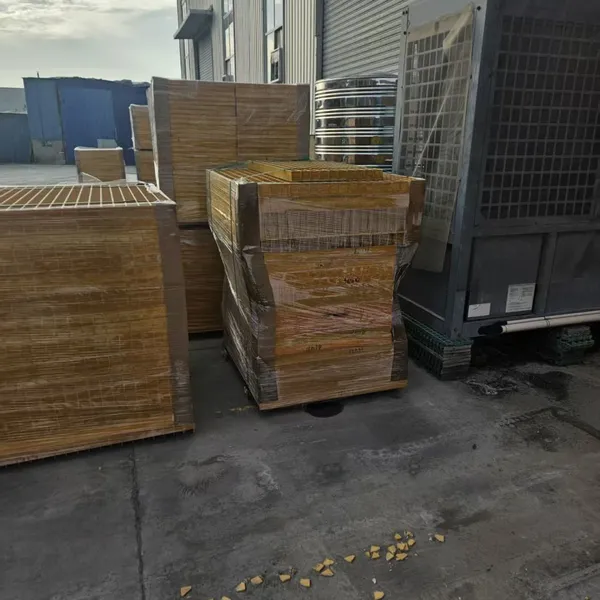 Read More
-
FRP Grating for Chemical Plant Walkways: Resin Choice by Exposure
November 6, 2026An isophthalic grating was specified for a caustic soda plant walkway because the liquid in the process was dilute, and the instal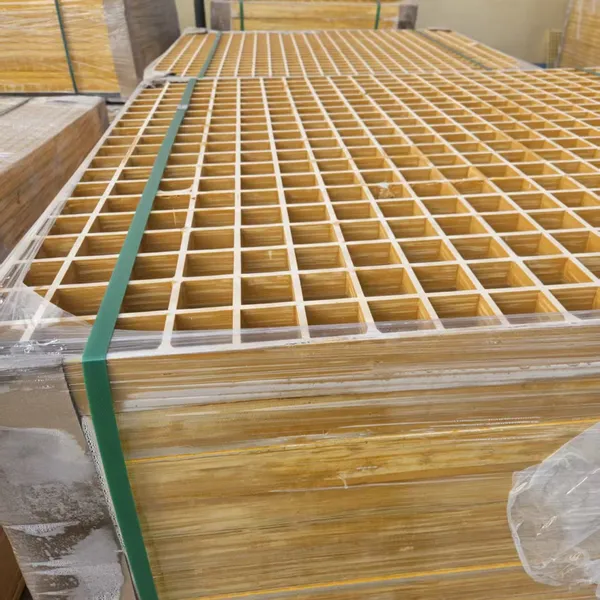 Read More
-
Insulated Stainless Tank Wall Thickness and Cladding
November 6, 2026A hospital plant room specified a 3 m tall insulated tank on a written tank wall thickness spec of 1.5 mm, and the shell bulged vi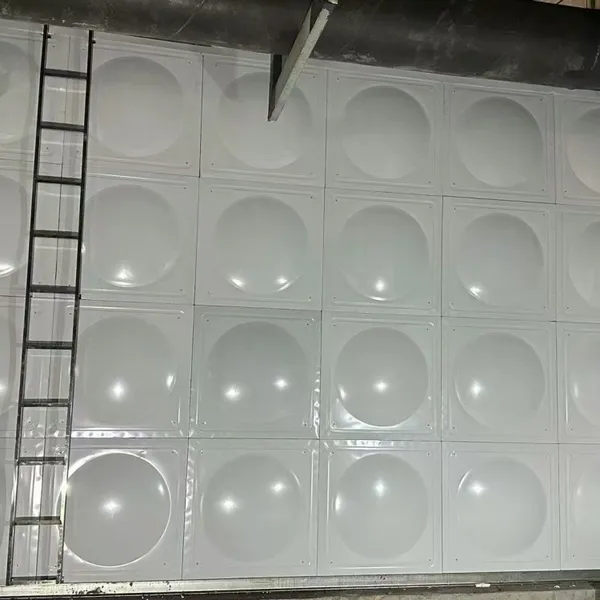 Read More
-
Welded Modular vs Bolted Panel Stainless Tanks
November 5, 2026A bottling plant ordered a bolted panel tank because the panels would fit up a service stair, then filled it and watched a bead of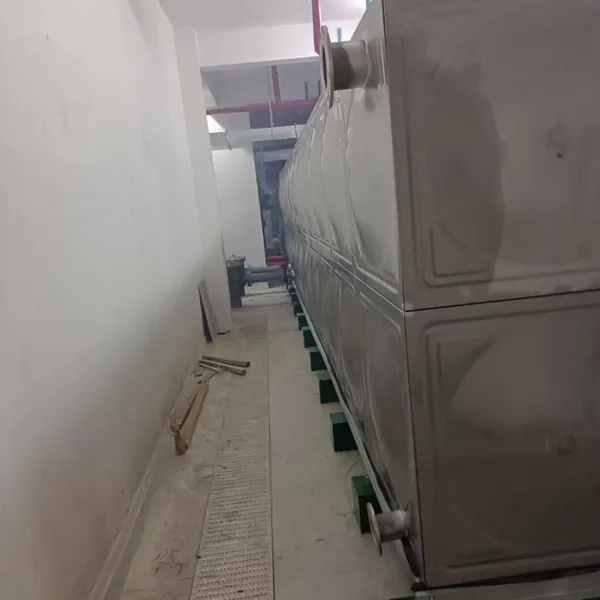 Read More

Contact Us
Recommended Products
-
 Desalination Plant FRP Grating Seawater Resistant Corrosion Proof Walkway PanelNegotiableMOQ: 300 Square Meters
-
Light High Strength Fiberglass Grating Coastal Dock WalkwayNegotiableMOQ: 100 Square Meters
-
Offshore Platform FRP Grating Saltwater Corrosion Resistant Oil Gas Deck FlooringNegotiableMOQ: 300 Square Meters
-
Fiberglass Reinforced Plastic FRP Grating for Industrial PlatformNegotiableMOQ: 100 Square Meters
-
Anti‑corrosion FRP Grating Production Proces 50mm FRP Grating PlateNegotiableMOQ: 300 Square Meters
-
Industrial Grade SMC FRP Composite Modular Panel Water Tank for Temporary Camp Water SupplyNegotiableMOQ: 1 Cubic Meter
-
Seafood Processing Plant FRP Grating Wear Moisture Resistant Anti Slip Production Floor PanelNegotiableMOQ: 300 Square Meters
-
Large Capacity Porcelain Enamel Steel Panel Type Water Tank for School Hot Water SystemNegotiableMOQ: 1 Cubic Meter
-
Large Capacity Porcelain Enamel Steel Bolted Panel Water Tank for Solar Water Heating StorageNegotiableMOQ: 1 Cubic Meter
-
Industrial Grade Porcelain Enamel Steel Sectional Water Tank for Dairy Processing Hot WaterNegotiableMOQ: 1 Cubic Meter
-
Yogurt Plant FRP Grating Wear Moisture Resistant Anti Slip Production Floor PanelNegotiableMOQ: 300 Square Meters
-
New Design Porcelain Enamel Steel Bolted Panel Water Tank for Dairy Processing Hot WaterNegotiableMOQ: 1 Cubic Meter
-
Reliable Porcelain Enamel Steel Sectional Water Tank for School Hot Water SystemNegotiableMOQ: 1 Cubic Meter
-
Wallpaper Plant FRP Grating Wear Dust Resistant Anti Slip Production Floor PanelNegotiableMOQ: 300 Square Meters
-
Durable Porcelain Enamel Steel Bolted Panel Water Tank for Swimming Pool Heating Water StorageNegotiableMOQ: 1 Cubic Meter
-
Curtain Plant FRP Grating Wear Dust Resistant Anti Slip Production Floor PanelNegotiableMOQ: 300 Square Meters
-
Heavy Duty Porcelain Enamel Steel Bolted Panel Water Tank for Hotel Hot Water SupplyNegotiableMOQ: 1 Cubic Meter
-
Customized Porcelain Enamel Steel Panel Type Water Tank for Laundry Hot Water StorageNegotiableMOQ: 1 Cubic Meter
-
Professional Porcelain Enamel Steel Bolted Panel Water Tank for Bathroom Hot Water SupplyNegotiableMOQ: 1 Cubic Meter
-
Towel Plant FRP Grating Wear Moisture Resistant Anti Slip Production Floor PanelNegotiableMOQ: 300 Square Meters