
 Business License
Blog Categories

Cleaning and Disinfection Regimes for FRP Livestock Grating
A finisher emptied a house, washed the slats for four hours, disinfected, and restocked after two days. The next group broke with diarrhoea inside the first week.
The disinfectant was the correct one at the correct dilution. What failed was the order of operations: the wash water was cold, the organic load on the slat surface was heavy, and the disinfectant was applied to a surface it could not reach.
Livestock grating disinfection is a sequence rather than a product, and the sequence is what most units get wrong.
This article sets out a workable FRP slat floor cleaning method, explains how to build a breeding grating hygiene routine around the material rather than around a product label, and covers what the grating itself will and will not tolerate.
1. Livestock Grating Disinfection: Why the Routine Fails Before the Chemistry Does
Most livestock grating disinfection failures trace to three causes, and none of them is the choice of disinfectant.
The first is organic load. Manure solids and biofilm consume disinfectant on contact, so a surface carrying a visible film will neutralise a working solution before it reaches a single organism.
The second is water hardness and pH. Hard water ties up quaternary ammonium compounds, and an alkaline wash residue left on the slats will blunt an acid-based product applied afterwards.
The third is contact time. A product that needs ten minutes of wet contact and is sprayed on a surface that dries in three has been applied at a fraction of its rated effect.
Fix those three and an ordinary product performs well. Skip them and the strongest product available performs badly.
2. FRP Slat Floor Cleaning: Remove Solids Dry First
Every FRP slat floor cleaning routine starts with dry removal, and the volume taken out dry is volume that never becomes waste water.
Scrape or sweep the slat surface and the pit below before any water goes on. On a typical finishing house this removes most of the solid mass in a fraction of the time the wet work will take.
Empty the pit and flush the slurry line at the same time, because a pit left loaded recontaminates the house through the air as soon as the fans come on.
Remove feed and water lines from the equation as well. Feed residue in a trough is a concentrated organic load, and a water line biofilm is a reservoir that no amount of floor washing will touch.
The dry phase is unglamorous and it is where a hygiene routine is won. A crew that starts with a hose spends the first hour spreading slurry across surfaces that were already clean.
3. Breeding Grating Hygiene Routine: The Wash Step in Detail
The wash step in a breeding grating hygiene routine has four settings that matter: water temperature, pressure, nozzle pattern and dwell.
Warm water at 40 to 50 degrees Celsius lifts fat and protein films that cold water smears. Above about 60 degrees the vapour becomes unpleasant to work in and the benefit stops rising.
Pressure of 80 to 120 bar at the nozzle is enough to strip a slat surface without driving water into the pit as aerosol. Higher pressure feels more effective and simply moves the contamination into the air.
A fan pattern at about 30 degrees to the surface covers a slat in one pass. A pencil jet at 90 degrees cuts a groove in the dirt and leaves the rest untouched.
Dwell is the setting most often ignored. Let the detergent sit for the ten minutes the label asks for, then rinse, rather than spraying and rinsing in one movement.
Work from the far end of the house towards the door, and from the top of the pen down, so that nothing clean is washed by water that has already run over something dirty. Junping Environmental Protection Equipment sets out that direction in the handling sheet because a crew washing towards the door re-soils the first pens it cleaned.
4. Livestock Grating Disinfection: Choosing the Chemistry
Product choice for livestock grating disinfection is a matter of matching the active ingredient to the target organism and to what the surface can take.
Glutaraldehyde blends give broad activity against bacteria and viruses and keep working in moderate organic load. They need a longer contact time than an oxidising product and are hard on the eyes in a closed house.
Peroxygen compounds based on potassium peroxymonosulphate are strong oxidisers with good activity against viral targets and leave no persistent residue in slurry. They are less stable in warm water and lose strength through a long spray pass.
Hypochlorite is cheap and fast and is neutralised by organic matter faster than anything else on this list. It is a poor choice for a first wash and a reasonable choice for a clean surface.
Quaternary ammonium compounds leave a residual film that keeps working after the surface dries, which suits footbaths and doorways more than a whole-house wash.
| Active ingredient | Usual dilution | Contact time | Suits |
|---|---|---|---|
| Glutaraldehyde blend | 0.5 to 1.0 percent | 15 to 30 minutes | Terminal clean with residual organic load |
| Peroxygen compound | 0.5 to 1.0 percent | 10 to 20 minutes | Viral challenge, cold water wash |
| Sodium hypochlorite | 0.2 to 0.5 percent | 10 to 15 minutes | Clean surfaces, footbaths, water lines |
| Quaternary ammonium | 0.1 to 0.3 percent | 10 minutes | Residual protection, entry points |
| Caustic detergent | 1 to 2 percent | 10 minutes | Heavy fat and protein before rinsing |
Concentrations above those figures do not compensate for a dirty surface, and they do attack the resin and the fittings.
5. FRP Slat Floor Cleaning: Pressure, Nozzle and What It Damages
FRP slat floor cleaning is tolerant of pressure and not tolerant of heat, and the difference decides how long the floor lasts.
A moulded FRP slat with a grit top will take years of 100 bar washing without visible change. The same slat washed with a steam lance at close range will lose its surface sheen within a season as the resin at the surface is softened and abraded.
Keep the nozzle at least 200 mm from the surface and keep it moving. A stationary jet at close range cuts through gelcoat, and once the glass is exposed the slat wicks liquid and stains permanently.
Check the edges at the end of every wash. A slat edge that has been chipped by a scraper or a boot will hold manure in the chip, and a chip is where a wash routine quietly stops working.
Junping Environmental Protection Equipment moulds a rounded edge on every slat for this reason, since a square edge is a chip waiting to happen under a scraper.
6. Breeding Grating Hygiene Routine: Drying and Downtime
The drying step is the one that gets cut when a restock date is close, and it is the step that decides whether the wash worked.
A wet slat surface keeps a residual population alive in the water film, and a disinfectant that has dried off has stopped working. Dry surfaces also let residual moisture in the joints equalise and evaporate.
Two full days of dry, ventilated downtime is a working minimum for a slatted house in warm weather, and four to five days is better. In cold humid weather, add a day.
Ventilation during drying matters as much as the clock. A closed house at high humidity will still be wet after four days, and the fan running for two of them will do more than the extra days alone.
Breeding grating hygiene routine planning usually sets the restock date first and works backwards. Setting the wash date first and compressing the dry phase is how a clean house becomes a contaminated one in the first week.
7. Livestock Grating Disinfection: Biofilm and the Hidden Reserve
Biofilm is the reason a house can look clean and still break with the same problem in the next group, and livestock grating disinfection has to address it deliberately.
A biofilm is a layer of organisms held in a self-produced matrix that sticks to a surface and resists both detergent and disinfectant. On a slat floor it forms in the joints, in scratches, and along the underside where the light and the brush do not reach.
Disinfectant applied to a biofilm kills the outer layer and leaves the base, which regrows within days once the house is restocked.
The workable approach is mechanical first: a brush or a rotating head over the joints and edges, then a detergent with a dwell time, then the disinfectant on a rinsed surface.
Rotating the active ingredient between cleans also helps, because a population that survives one product is not necessarily the population that survives a different chemistry.
Sample the surfaces rather than the air if you want to know the state of the house. Zaoqiang Junping Environmental Protection Equipment recommends swabs from three points per pen, taken before the disinfectant dries. Swabs from slat joints and feeder edges tell you more than a settling plate ever will.
8. FRP Slat Floor Cleaning: What the Material Tolerates
The good news for FRP slat floor cleaning is that the material was chosen for exactly this environment, and the limits are narrower than most people assume.
Moulded FRP with an isophthalic or vinyl ester resin handles caustic detergents, hypochlorite, peroxygen and quaternary ammonium compounds at the dilutions in common use.
It handles hot water to about 60 degrees Celsius for short periods. Sustained hot water above that softens the resin, and a steam lance held on one spot will mark the surface permanently.
It does not handle concentrated acids, strong solvents or prolonged contact with hypochlorite at high strength. A spill of concentrated disinfectant left overnight on a slat will leave a dull patch that never recovers.
Gritted surfaces hold a little more residue than smooth ones, which is a hygiene argument for a smooth top in farrowing and a gritted top in areas where stock slip. Both clean well with the same routine.
9. Breeding Grating Hygiene Routine: Writing the Cycle Down
A breeding grating hygiene routine that lives in one person's head stops working when that person is on leave, so it belongs on a laminated sheet in the office.
The sheet needs the sequence, the product and dilution for each step, the contact time, the drying days, and the name of whoever signs the house off.
It also needs a trigger for a problem house, so that a group with a health issue gets an extra mechanical pass rather than an extra chemical one.
Keep a record per house: date out, dry removal, wash, disinfectant and dilution, drying days, date in. Two seasons of that record shows which houses consistently need more work and which products have stopped performing.
Zaoqiang Junping Environmental Protection Equipment LLC supplies a cleaning and handling sheet with every livestock grating order, covering the temperatures and chemicals the panels were built for, so a farm team is not guessing at limits.
10. FAQ: Cleaning FRP Livestock Grating
10.1 How often should livestock grating be disinfected?
Terminal cleaning between groups is the baseline, and the interval that matters is the one between groups rather than a calendar figure. A house turned around in twelve days gets a full wash and dry cycle each time, while a continuous-flow house needs a daily scrape and a periodic spot treatment on wet areas. Between those two ends, the routine follows the health record: a house that keeps breaking with the same problem needs a mechanical review before it needs a stronger product.
10.2 Can I use a steam cleaner on FRP slats?
Briefly and from a distance, but not as a routine method for a slatted floor. Steam at close range delivers heat well above the temperature the resin was formulated to hold, and the surface softens and dulls where the lance lingers. Warm water at 40 to 50 degrees Celsius through a pressure washer does the same cleaning job without the risk. If a steam lance is used on a stubborn spot, keep it moving and keep it at least 300 mm away from the slat and off any cut edge.
10.3 Which disinfectant is safest for FRP grating?
At working dilutions, glutaraldehyde blends, peroxygen compounds and quaternary ammonium products are all compatible with a moulded FRP slat. The risk sits with concentrated product rather than with the family: a puddle of neat hypochlorite or a strong acid left on a slat overnight will attack the resin surface. Dilute to the label figure, apply to a rinsed surface, and rinse the concentrate off any panel it splashes onto during mixing. Read the label for acid content before using a descaler on slats, since descalers are often the strongest product on the farm.
10.4 Why does the house still smell after cleaning?
Because the source is below the slats rather than on them. A pit that was not emptied, a slurry channel with a settled layer, or a biofilm in the water line will repopulate the house within hours of restocking. The slat surface is the easiest part of the building to clean, the most visible, and the least likely to be the problem. Empty the pit, flush the channel and sanitise the water line in the same cycle, then judge the result.
Recently Posted
-
FRP Grating for Chemical Plant Walkways: Resin Choice by Exposure
November 6, 2026An isophthalic grating was specified for a caustic soda plant walkway because the liquid in the process was dilute, and the instal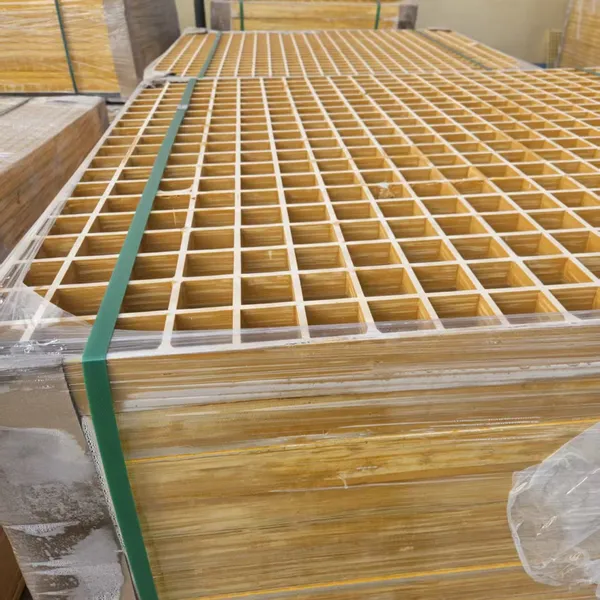 Read More
-
Insulated Stainless Tank Wall Thickness and Cladding
November 6, 2026A hospital plant room specified a 3 m tall insulated tank on a written tank wall thickness spec of 1.5 mm, and the shell bulged vi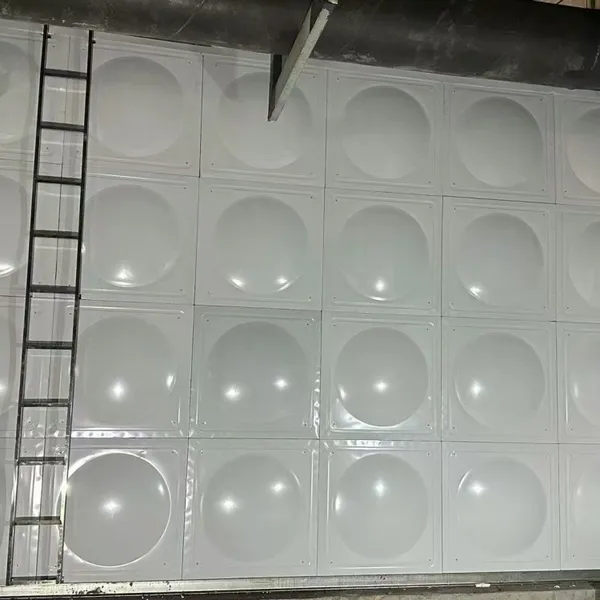 Read More
-
Welded Modular vs Bolted Panel Stainless Tanks
November 5, 2026A bottling plant ordered a bolted panel tank because the panels would fit up a service stair, then filled it and watched a bead of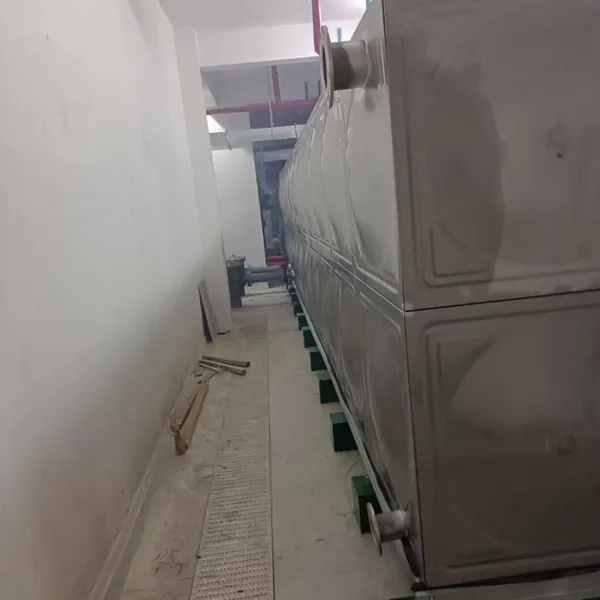 Read More
-
Moving and Erecting Large Tank Sections
November 5, 2026A 500 cubic metre galvanized tank arrived on site as twelve wall sections and a stack of base plates, and the contractor had booke Read More

Contact Us
Recommended Products
-
 Desalination Plant FRP Grating Seawater Resistant Corrosion Proof Walkway PanelNegotiableMOQ: 300 Square Meters
-
Light High Strength Fiberglass Grating Coastal Dock WalkwayNegotiableMOQ: 100 Square Meters
-
Offshore Platform FRP Grating Saltwater Corrosion Resistant Oil Gas Deck FlooringNegotiableMOQ: 300 Square Meters
-
Fiberglass Reinforced Plastic FRP Grating for Industrial PlatformNegotiableMOQ: 100 Square Meters
-
Anti‑corrosion FRP Grating Production Proces 50mm FRP Grating PlateNegotiableMOQ: 300 Square Meters
-
Industrial Grade SMC FRP Composite Modular Panel Water Tank for Temporary Camp Water SupplyNegotiableMOQ: 1 Cubic Meter
-
Seafood Processing Plant FRP Grating Wear Moisture Resistant Anti Slip Production Floor PanelNegotiableMOQ: 300 Square Meters
-
Large Capacity Porcelain Enamel Steel Panel Type Water Tank for School Hot Water SystemNegotiableMOQ: 1 Cubic Meter
-
Large Capacity Porcelain Enamel Steel Bolted Panel Water Tank for Solar Water Heating StorageNegotiableMOQ: 1 Cubic Meter
-
Industrial Grade Porcelain Enamel Steel Sectional Water Tank for Dairy Processing Hot WaterNegotiableMOQ: 1 Cubic Meter
-
Yogurt Plant FRP Grating Wear Moisture Resistant Anti Slip Production Floor PanelNegotiableMOQ: 300 Square Meters
-
New Design Porcelain Enamel Steel Bolted Panel Water Tank for Dairy Processing Hot WaterNegotiableMOQ: 1 Cubic Meter
-
Reliable Porcelain Enamel Steel Sectional Water Tank for School Hot Water SystemNegotiableMOQ: 1 Cubic Meter
-
Wallpaper Plant FRP Grating Wear Dust Resistant Anti Slip Production Floor PanelNegotiableMOQ: 300 Square Meters
-
Durable Porcelain Enamel Steel Bolted Panel Water Tank for Swimming Pool Heating Water StorageNegotiableMOQ: 1 Cubic Meter
-
Curtain Plant FRP Grating Wear Dust Resistant Anti Slip Production Floor PanelNegotiableMOQ: 300 Square Meters
-
Heavy Duty Porcelain Enamel Steel Bolted Panel Water Tank for Hotel Hot Water SupplyNegotiableMOQ: 1 Cubic Meter
-
Customized Porcelain Enamel Steel Panel Type Water Tank for Laundry Hot Water StorageNegotiableMOQ: 1 Cubic Meter
-
Professional Porcelain Enamel Steel Bolted Panel Water Tank for Bathroom Hot Water SupplyNegotiableMOQ: 1 Cubic Meter
-
Towel Plant FRP Grating Wear Moisture Resistant Anti Slip Production Floor PanelNegotiableMOQ: 300 Square Meters