
 Business License
Blog Categories

FRP Grating for Chemical Plant Walkways: Resin Choice by Exposure
An isophthalic grating was specified for a caustic soda plant walkway because the liquid in the process was dilute, and the installation looked sound for a little over two seasons.
Then the handrails began to show a chalky bloom, the surface under the drip line softened to a fingernail, and the walkway became a maintenance argument between two departments.
The mistake was not the resin grade itself. It was reading the exposure as a liquid concentration on a datasheet rather than as a temperature, a vapour and a splash pattern in a real building.
Choosing FRP grating for chemical plant walkways works when the exposure is written down first and the resin is chosen second. This article covers FRP grating acid fume exposure, explains where a vinyl ester FRP grating walkway earns its premium, and sets out the details that fail before the resin does.
1. FRP Grating for Chemical Plant Walkways: Write the Exposure First
Selecting FRP grating for chemical plant walkways begins with an exposure list, and that list has more columns than most specifications allow.
For each medium, write down the chemical name, the concentration as a range rather than a single figure, the temperature at the walkway surface, and whether the contact is a splash, a continuous drip, a spill that gets hosed off, or a vapour.
Add the cleaning regime. A walkway washed weekly with a chlorinated foam sees a different environment from one that is swept, and the cleaning chemical is often the aggressive one.
Add the time factor: whether the spill sits until the end of a shift or is drained away in minutes. Duration of contact changes the answer as much as concentration does.
A specification that says no more than "chemical plant, corrosive environment" leaves the supplier to guess, and the guess will be made from the price book rather than from the process.
2. FRP Grating Acid Fume Exposure: Vapour Is the Harder Case
FRP grating acid fume exposure is frequently underestimated because the walkway never looks wet.
Liquid contact on a horizontal surface runs off and is diluted by washdown. Vapour, by contrast, reaches every face of the grating, including the underside of the bearing bars where nobody inspects and where condensate collects.
Hydrochloric acid vapour above a pickling line is the classic example. It condenses on the cool underside of a walkway in a thin film that concentrates as it evaporates, then re-condenses, cycling the surface through wet and dry states many times a week.
Each wetting cycle draws a little resin out of the surface layer, and the exposed glass then wicks liquid along the fibre by capillary action. That is the mechanism behind a walkway that looks intact on top and delaminates from below.
A grating selected for a splash of the same acid will often be underspecified for its vapour, because the vapour is present continuously and the splash is occasional.
3. Resin Selection: Polyester, Isophthalic and Vinyl Ester
Three resin families cover almost all chemical walkway work, and they differ in the ester linkages that water and acid attack.
Orthophthalic polyester is the budget choice and suits mild atmospheric exposure, fresh water splash and general industrial weather. It is a poor choice anywhere an acid sits on the surface.
Isophthalic polyester adds strength and hydrolysis resistance and suits dilute acids, alkalis and many salt solutions at moderate temperature. It is the common default for a plant where the exposure list is modest.
Vinyl ester epoxy novolac sits above both. Its reactive sites are at the ends of the molecule rather than along the chain, so an attack at one site does not unzip the polymer, and it holds up against strong acids, hypochlorite and solvents that break the polyesters down.
The table below sets out where each family is normally specified, with the temperature ceiling understood as a working figure rather than a limit to design against.
| Resin family | Typical exposure | Working temperature | Relative cost |
|---|---|---|---|
| Orthophthalic polyester | Weather, fresh water splash, mild atmosphere | Up to about 50 C | Baseline |
| Isophthalic polyester | Dilute acids and alkalis, salt solutions, washdown | Up to about 65 C | Plus 10 to 15 percent |
| Vinyl ester | Strong acids, hypochlorite, solvents, acid vapour | Up to about 90 C | Plus 30 to 45 percent |
| Vinyl ester novolac | Hot concentrated acid, mixed acid attack | Up to about 110 C | Plus 55 to 70 percent |
Those ceilings drop sharply as concentration rises, and a resin near its ceiling with a concentrated medium is a short life installation.
4. Vinyl Ester FRP Grating Walkway: Where It Earns the Premium
A vinyl ester FRP grating walkway costs 30 to 45 percent more than an isophthalic one, and the premium is recovered or wasted depending on where it is placed.
It is recovered on any walkway above a pickling bath, a chlorine dosing area, a hypochlorite store, or a solvent handling zone. Those are the places where the cheaper resin fails within a few years and the replacement cost lands on a shutdown window.
It is wasted on a walkway beside a cooling tower or across a clean water channel, where the exposure is weather and splash and the isophthalic grade will outlast the structure that supports it.
Mixed plants get mixed specifications, and that is normal. A single plant often carries three resin grades on different walkways, decided walkway by walkway from the exposure list.
Junping Environmental Protection Equipment quotes resin grade against each walkway on the drawing rather than one grade for the whole order, so the budget goes where the exposure is.
5. FRP Grating for Chemical Plant Walkways: Concentration and Temperature Together
Resin resistance data is usually published as a grid of concentration against temperature, and reading a single cell as a verdict is where most selection errors start.
A resin rated for 25 percent sulphuric acid at 40 degrees Celsius is not rated for 50 percent at the same temperature, and may not be rated for 25 percent at 70 degrees.
Temperature accelerates attack roughly by doubling the reaction rate for every 10 degrees in the range where the chemistry is thermally driven. A walkway 10 degrees warmer than the design assumption can lose half its expected life.
Walkways over steam lines, beside dryers and under roof glazing in summer all run hotter than the ambient figure on a weather file. Measure the surface temperature in service if the tank or line is already running.
Where the exposure list has a range, design to the top of the range and the highest sustained temperature, not to the average of the two.
6. FRP Grating Acid Fume Exposure: The Details That Fail First
In practice a walkway rarely fails across a whole panel, and FRP grating acid fume exposure shows up first at four predictable places.
Cut edges are the first. A panel cut on site exposes raw glass with no resin cover, and that edge wicks liquid into the laminate within days. Every cut needs sealing with a resin coat matched to the panel.
Drilled holes for clips and fixings are the second, for the same reason and with the added problem that the hole is a crevice where liquid sits.
The third is the joint between panels. A gap of 10 mm collects spillage and keeps it there, so a walkway built from panels butted tight lasts longer than one with generous gaps.
The fourth is the underside of the walkway above a tank or a bath, which is where condensate collects and where inspection rarely goes. A walkway that is inspected from above alone is inspected on its least exposed face.
Zaoqiang Junping Environmental Protection Equipment supplies a matching resin touch-up kit with every chemical-duty order, because a sealed cut edge costs minutes and an unsealed one costs a panel.
7. Vinyl Ester FRP Grating Walkway: Support, Clips and Fire Performance
Resin choice gets the attention, and a vinyl ester FRP grating walkway still fails early if the support and fixing details are wrong.
Stainless clips are normal in chemical service, in 304 or 316 depending on the atmosphere. Mild steel clips galvanised and then exposed to acid vapour will corrode and stain the grating around them, and the stain is often mistaken for resin failure.
Support steel needs the same coating discussion as the grating. A walkway sitting on painted carbon steel stringers will outlive its supports, and the replacement then costs more than the panel.
Fire performance is a separate specification from chemical resistance and is often decided by the insurance review rather than the process engineer. A fire retardant grade carries additives that raise the limiting oxygen index, and those additives sit in the same resin that has to resist the acid.
Where both are needed, say so at enquiry stage. A fire retardant vinyl ester is a different formulation from a standard vinyl ester, and substituting one for the other after the order is placed changes both properties.
8. FRP Grating for Chemical Plant Walkways: Inspection That Finds the Truth
An inspection routine for FRP grating for chemical plant walkways has to look at the surfaces that face the exposure rather than the ones that face the walker.
Check the underside first, with a light, at the points above any bath, tank or drip line. Look for fibre print, a dull or chalky surface, and any area that feels soft under a screwdriver handle.
Check every cut edge and drilled hole for a white or fibrous appearance, which means resin has been lost and glass is exposed.
Check the colour of the resin, not just its condition. A shift from grey to a pale straw tone on the top surface is a sign of surface attack, and it usually appears a season before the strength drops.
Tap suspect areas with a coin. A sharp ring says the laminate is sound, and a dull thud says it has separated from the bar behind it.
Record the readings and the photographs by walkway and date, because a chemical plant's maintenance budget is decided by trend rather than by a single inspection. Junping Environmental Protection Equipment keeps a resin and panel record per walkway for the same reason, so a replacement ordered years later matches what was installed.
9. Vinyl Ester FRP Grating Walkway: Matching the Medium to a Grade
Most selection meetings end with a short list of media, and the list below covers the cases that come up repeatedly in chemical and water treatment plants.
Treat it as a starting point for the enquiry rather than a substitute for the exposure list, because concentration and temperature move every row.
| Medium | Usual resin | Note |
|---|---|---|
| Dilute sulphuric acid, ambient | Isophthalic | Vinyl ester above about 40 C |
| Hydrochloric acid vapour | Vinyl ester | Underside attack is the risk |
| Sodium hypochlorite | Vinyl ester | Polyester degrades quickly |
| Sodium hydroxide, dilute | Isophthalic | Rinse before inspection |
| Solvent splash | Vinyl ester novolac | Check the specific solvent |
| Cooling tower drift | Isophthalic | UV topcoat helps outdoors |
| Fresh water and weather | Orthophthalic | Adequate for most yards |
Zaoqiang Junping Environmental Protection Equipment LLC asks for the medium, concentration, temperature and contact pattern on every chemical enquiry, and will decline to quote a resin grade until those four are answered.
10. FAQ: FRP Grating in Chemical Service
10.1 Is vinyl ester always the right choice in a chemical plant?
No, and specifying it everywhere wastes budget that is better spent on the two or three walkways that actually see aggressive media. Vinyl ester earns its 30 to 45 percent premium above a pickling line, a hypochlorite store or a solvent area, and adds little on a cooling tower deck or a clean water channel. A plant that grades each walkway from its own exposure list usually ends up with a mix, and that mix is cheaper than one premium grade applied across the site.
10.2 How long does FRP grating last against acid fume?
With the right resin and sealed edges, a decade is a reasonable expectation, and the spread around that figure is wide. A vinyl ester panel above a hydrochloric pickling line with condensate running off may give twelve years, while an isophthalic panel in the same place may show surface attack within two. The variables that move the number most are temperature, whether the underside stays wet, and whether cut edges were sealed at installation. Judge the underside of an existing walkway before the top surface, since the underside tells you what the service life will be.
10.3 Can I repair a damaged vinyl ester FRP grating walkway?
Local repairs are practical on solid top material and limited on open mesh. A crack in a bearing bar can be ground back, rebuilt with resin and glass, and dressed, which restores most of the section. A panel with widespread fibre print or a soft underside cannot be repaired economically and should be replaced. Any repair needs the same resin family as the original panel, since a polyester patch on a vinyl ester substrate bonds poorly and fails at the interface.
10.4 What temperature should I use for resin selection?
The temperature at the grating surface in service, not the ambient design figure for the building and not the average of a weather file. A walkway above a steam line, under glazing or beside a dryer runs hotter than the room, often by 10 to 20 degrees, and heat cuts resin life sharply. Where a plant is already operating, measure the surface with an infrared thermometer on a hot afternoon. Where it is not yet built, take the process temperature and assume the surface sits close to it.
Recently Posted
-
Cleaning and Disinfection Regimes for FRP Livestock Grating
November 6, 2026A finisher emptied a house, washed the slats for four hours, disinfected, and restocked after two days. The next group broke with Read More
-
Insulated Stainless Tank Wall Thickness and Cladding
November 6, 2026A hospital plant room specified a 3 m tall insulated tank on a written tank wall thickness spec of 1.5 mm, and the shell bulged vi Read More
-
Welded Modular vs Bolted Panel Stainless Tanks
November 5, 2026A bottling plant ordered a bolted panel tank because the panels would fit up a service stair, then filled it and watched a bead of Read More
-
Moving and Erecting Large Tank Sections
November 5, 2026A 500 cubic metre galvanized tank arrived on site as twelve wall sections and a stack of base plates, and the contractor had booke Read More

Contact Us
Recommended Products
-
 Desalination Plant FRP Grating Seawater Resistant Corrosion Proof Walkway PanelNegotiableMOQ: 300 Square Meters
-
Light High Strength Fiberglass Grating Coastal Dock WalkwayNegotiableMOQ: 100 Square Meters
-
Offshore Platform FRP Grating Saltwater Corrosion Resistant Oil Gas Deck FlooringNegotiableMOQ: 300 Square Meters
-
Fiberglass Reinforced Plastic FRP Grating for Industrial PlatformNegotiableMOQ: 100 Square Meters
-
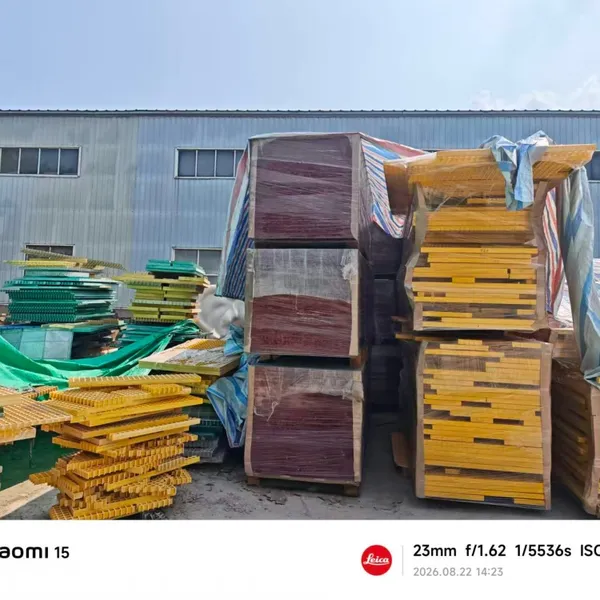
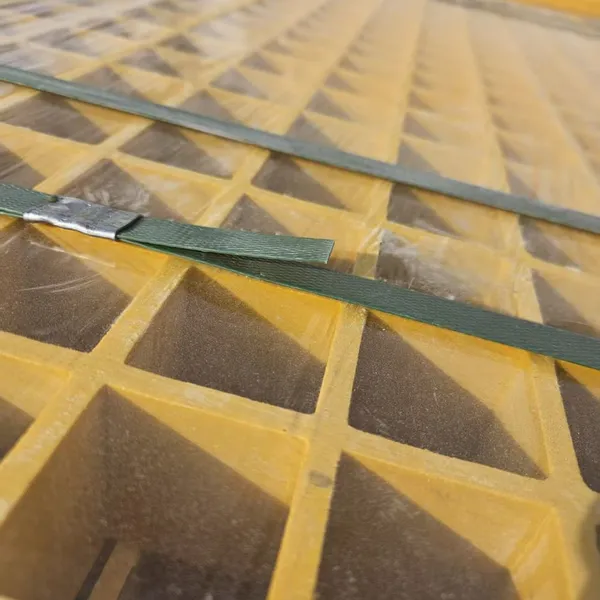
Anti‑corrosion FRP Grating Production Proces 50mm FRP Grating PlateNegotiableMOQ: 300 Square Meters
-
New Design SMC FRP Composite Modular Panel Water Tank for Lightweight Water StorageNegotiableMOQ: 1 Cubic Meter
-
Sheep Farm FRP Grating Wear Moisture Resistant Anti Slip Production Floor PanelNegotiableMOQ: 300 Square Meters
-
Hot Sale SMC FRP Composite Bolted Panel Water Tank for Lightweight Water StorageNegotiableMOQ: 1 Cubic Meter
-
High Performance SMC FRP Composite Bolted Panel Water Tank for Desert Camp Water StorageNegotiableMOQ: 1 Cubic Meter
-
Film Studio FRP Grating Wear Dust Resistant Anti Slip Workshop Floor PanelNegotiableMOQ: 300 Square Meters
-
Durable SMC FRP Composite Sectional Water Tank for Villa Rooftop Water StorageNegotiableMOQ: 1 Cubic Meter
-
Wholesale SMC FRP Composite Modular Panel Water Tank for Temporary Camp Water SupplyNegotiableMOQ: 1 Cubic Meter
-
Publishing House FRP Grating Wear Dust Resistant Anti Slip Office Floor PanelNegotiableMOQ: 300 Square Meters
-
Top Quality SMC FRP Composite Modular Panel Water Tank for Fishing Village Water StorageNegotiableMOQ: 1 Cubic Meter
-
Heavy Duty SMC FRP Composite Bolted Panel Water Tank for Villa Rooftop Water StorageNegotiableMOQ: 1 Cubic Meter
-
TV Station FRP Grating Wear Dust Resistant Anti Slip Office Floor PanelNegotiableMOQ: 300 Square Meters
-
Professional SMC FRP Composite Bolted Panel Water Tank for Island Water SupplyNegotiableMOQ: 1 Cubic Meter
-
Top Quality SMC FRP Composite Bolted Panel Water Tank for Mountain Resort Water StorageNegotiableMOQ: 1 Cubic Meter
-
Western Restaurant FRP Grating Wear Oil Resistant Anti Slip Dining Floor PanelNegotiableMOQ: 300 Square Meters
-
High Quality SMC FRP Composite Bolted Panel Water Tank for Temporary Camp Water SupplyNegotiableMOQ: 1 Cubic Meter