
 Business License

What Is FRP Grating? Definition, Construction and Material Grades
A wash operator in Southeast Asia replaced 240 square meters of walkway decking not long ago and took five lanes out of service for three weeks. The panels matched the purchase order on every line: glass fiber reinforced plastic, 38 mm deep, 1220 by 3660 mm. They still failed in service, because nobody had turned a product name into a set of measurable requirements.
Rinse water carried grit and foam through the decking and pooled underneath. Operators could not see the drain channels, and bolts shaken loose from the conveyor dropped through the openings onto the equipment below.
The distance between a catalog label and an engineered panel is where most of these problems sit. This article works through a molded FRP grating definition, explains what the FRP grating open mesh area actually controls, and shows how the fiberglass grating resin grade decides whether a panel survives its environment.
1. Molded FRP Grating Definition and Panel Anatomy
A molded FRP grating definition rests on the manufacturing route rather than on the finished appearance. Continuous glass fiber roving is laid into a heated steel mold in alternating directions, wetted with thermosetting resin, and cured under pressure. The result is one piece with load carrying members running in both directions.
That bidirectional structure separates molded panels from pultruded ones, where bearing bars run in a single direction and are tied by separate cross rods. Both are glass fiber products. They behave differently under a point load and they are specified differently.
Three features define the panel. The bearing bar carries load to the supports. The cross bar ties bearing bars together and spreads a concentrated load across several of them. The junction where the two meet is where stress concentrates, and it is also where resin content matters most.
Typical figures for a 25 mm panel sit in a narrow band. Resin content runs 25 to 35 percent by weight, glass content 30 to 40 percent, and Barcol hardness on the finished surface reads 40 or above. Our team at Zaoqiang Junping Environmental Protection Equipment LLC checks all three on every production batch, since a panel that misses the resin window on the low side turns brittle at those junctions.
Panel geometry follows a small set of industry norms. The table below covers the shapes that appear on most orders.
| Grid (mm) | Depth (mm) | Weight (kg/m2) | Open area | Typical use |
|---|---|---|---|---|
| 38 x 38 | 25 | 12.5 to 13.5 | 68 to 72 percent | Walkways and platforms |
| 38 x 38 | 30 | 15 to 16 | 68 to 72 percent | Medium duty access |
| 38 x 38 | 38 | 19 to 21 | 68 to 72 percent | Vehicle and heavy duty |
| 19 x 19 | 25 | 19 to 21 | 45 to 52 percent | Small drop protection |
| 50 x 50 | 25 | 9 to 10 | 76 to 80 percent | High flow drainage |
2. FRP Grating Open Mesh Area and Why It Is Quoted
Open mesh area is the share of the panel footprint that is air. A 38 mm grid on 38 mm bar spacing lands near 70 percent, and the FRP grating open mesh area moves with bar width rather than with panel depth. Thicker panels add weight and stiffness without changing the open share much.
Buyers quote it because it drives three things at once. It sets how fast water clears the deck, how much light reaches the surface underneath, and what size of object can fall through.
The FRP grating open mesh area also decides how a deck behaves under wind and under a pressure wash. A 78 percent open panel passes spray through instead of deflecting it back at the operator, which is why wash bays tend toward coarse grids.
| Grid | Open area | Drainage at 10 mm head | Blocks objects above |
|---|---|---|---|
| 19 x 19 mm | 45 to 52 percent | Around 18 L/m2 per second | 25 mm and larger |
| 38 x 38 mm | 68 to 72 percent | Around 32 L/m2 per second | 45 mm and larger |
| 50 x 50 mm | 76 to 80 percent | Around 40 L/m2 per second | 60 mm and larger |
A food plant some time ago swapped a 50 mm mesh for 19 mm on a mezzanine above a packing line. Drainage slowed by roughly a third, but dropped hand tools stopped reaching the line below, and the maintenance lead considered that a fair trade.
3. Fiberglass Grating Resin Grade and Corrosion Class
Resin choice shapes service life more than thickness does. Four families cover most of the market, and each maps to a band of chemical exposure.
Orthophthalic polyester suits dry indoor walkways and light duty enclosures. Isophthalic polyester adds water and alkali resistance and is the usual default for outdoor and washdown areas, which makes it the most common fiberglass grating resin grade in general industrial work. Vinyl ester handles acids, hypochlorite and hot brine. Phenolic resin trades mechanical strength for low smoke and low flame spread.
The fiberglass grating resin grade is written on the data sheet as a family name, and buyers sometimes read it as a quality ranking. It is closer to a fit ranking. A vinyl ester panel on a dry indoor walkway costs roughly 40 percent more than an isophthalic one and delivers nothing extra there.
| Resin family | Service environment | Temperature guide | Cost index |
|---|---|---|---|
| Orthophthalic | Dry indoor, mild fumes | Up to 60 C | 100 |
| Isophthalic | Outdoor, washdown, mild alkali | Up to 80 C | 110 to 120 |
| Vinyl ester | Acids, chlorine, brine | Up to 100 C | 145 to 165 |
| Phenolic | Low smoke, enclosed spaces | Up to 120 C | 150 to 175 |
A chlorination room in a municipal plant is a fair test of the fiberglass grating resin grade. Sodium hypochlorite mist attacks orthophthalic panels within two or three seasons, while vinyl ester panels in the same room show surface gloss loss but keep their flexural strength.
4. Molded Grating Bearing Bars and Load Path
Load moves from the walking surface into the bearing bars and then into the steel supports. Two numbers describe capacity: uniform load in kN per square meter, and concentrated load in kN over a small footprint.
A 25 mm molded grating on 600 mm supports typically carries 5 kN/m2 with deflection under 10 mm. The same panel on 1200 mm supports drops to roughly 1.5 kN/m2 before deflection controls the design. Nothing about the panel changed. The support grid did.
Deflection usually governs before strength does. Glass fiber reinforced plastic has a modulus near 10 to 15 GPa, about a tenth of steel, so a span that feels solid in steel will sag visibly in FRP at the same depth.
| Support span | Uniform load (25 mm) | Uniform load (38 mm) | Deflection at rated load |
|---|---|---|---|
| 600 mm | 5.0 kN/m2 | 9.0 kN/m2 | Under 8 mm |
| 900 mm | 2.8 kN/m2 | 5.5 kN/m2 | Under 9 mm |
| 1200 mm | 1.5 kN/m2 | 3.0 kN/m2 | Under 10 mm |
5. Open Mesh Area Percentages Across Standard Panels
Junping Environmental Protection Equipment molds five grid patterns, and the FRP grating open mesh area across them runs from roughly 45 percent to 80 percent. Picking between them is a matter of matching the grid to what falls, flows or blows through the deck.
A service walkway over a pump sump usually wants 68 to 72 percent, because the grid is coarse enough to shed debris and fine enough to feel stable underfoot. A mezzanine over an assembly line usually wants 45 to 52 percent for drop protection.
Panel width matters here as well. Standard 1220 mm panels cut to a 900 mm walkway leave a 300 mm offcut that is often unusable, so a drawing that lands on 610 mm or 1220 mm multiples wastes less material. Junping quotes the FRP grating open mesh area alongside the panel count on every drawing review, because the two together decide whether a cut plan works.
6. Resin Grade Options for Fiberglass Grating
Within each resin family there are add-on choices that change field performance without changing the family name on the label.
UV stabiliser slows surface chalking on outdoor decks and typically adds 3 to 5 percent to panel cost. Pigment affects appearance and, in dark colours, surface temperature. A flame retardant package based on alumina trihydrate at 20 to 30 percent loading raises the oxygen index from around 20 to 26 or higher. Anti-static additives serve solvent handling areas where a discharge could ignite vapour.
Each add-on trades something away. A heavy flame retardant load can cut flexural modulus by 5 to 10 percent, so a panel sized on the plain resin may need a step up in depth once the package is added.
7. Surface Treatments on a Molded FRP Grating
Four surface options dominate, and the difference between them shows up in the first wet month rather than in the catalog photograph.
A smooth top is the least expensive and the most slippery when wet, with a friction coefficient near 0.4. A grit top bonds angular silica into the resin during cure and lifts wet friction to 0.7 or higher. A concave top forms a shallow dish on each bar and holds a film of water away from the boot. A cover plate closes the mesh entirely for walkways where nothing should fall through.
| Surface | Wet friction | Cleaning effort | Relative cost |
|---|---|---|---|
| Smooth | Around 0.4 | Low | 100 |
| Concave | Around 0.5 | Low | 105 |
| Grit top | 0.7 or higher | Medium, grit traps fines | 115 to 125 |
| Cover plate | Depends on top coat | High, needs full sweep | 140 to 160 |
Grit tops and food areas do not always sit well together. Loose silica can migrate into product zones, so many processors prefer a concave top plus a scheduled washdown instead.
8. Fire Performance and Resin Grade Additives
Fire behaviour of a grating panel is a system property. Resin family, filler loading and panel geometry all contribute, which is why a single material claim rarely settles a specification question.
Three tests appear most often in project documents. Surface burning characteristics follow ASTM E84, horizontal burning follows ASTM D635, and limiting oxygen index follows ASTM D2863. A phenolic panel with a filled resin can reach a flame spread index below 25 and a smoke developed index below 450, which is where Class A begins in many specifications. The same geometry in isophthalic resin typically sits two classes lower.
The fiberglass grating resin grade therefore carries a fire consequence as well as a corrosion one. Where a specifier asks for low smoke in an enclosed stair or tunnel, the resin family is the first decision and the additive package is the second.
9. Reading a Molded Grating Data Sheet
Most specification errors trace back to three habits. Buyers read a uniform load where the project applies a point load, ignore the support span the figure was measured at, and take the published number as an allowable rather than a failure value. A molded FRP grating definition that stops at the grid pattern leaves all three open.
A wastewater plant ordered 160 square meters of 38 mm panels some time ago for a channel cover and quoted a catalog figure of 5 kN/m2 in its tender. The steel supports underneath came out at 1.4 m spacing, which cut the safe uniform load to roughly 1.8 kN/m2. The panels sat stacked on site for a month before anyone ran the check. Re-cutting the support grid added 18 steel brackets and moved installation by two weeks.
Junping supplies a span table with every order so the buyer can match the panel to the actual steel layout instead of to a headline number. That single sheet prevents more site problems than any coating upgrade.
10. FAQ: Grating Definition and Mesh Questions
10.1 What is the molded FRP grating definition in practical terms?
It is a single-piece panel made by laying glass fiber roving into a heated mold in two directions, wetting it with thermosetting resin, and curing it under pressure. The two-direction layup is what separates it from a pultruded panel, which has bearing bars in one direction tied by separate rods. In practice the molded FRP grating definition comes down to that bidirectional structure, because it decides how the panel spreads a point load and how it is cut on site.
10.2 How much open mesh area should a washdown deck have?
Most washdown decks work well between 68 and 78 percent open area, a band that clears rinse water quickly without opening the grid so far that small fittings drop through. Below 60 percent, water and foam sit on the surface longer and carry grit into corners. Above 80 percent, small tools and fittings start dropping through, and the deck feels less stable underfoot. A 38 mm grid near 70 percent is the usual starting point, with a 50 mm grid reserved for heavy flow and a 19 mm grid reserved for drop protection over equipment.
10.3 Which fiberglass grating resin grade suits a coastal site?
Isophthalic polyester covers most coastal walkways, because salt spray and humid air are within its range. Vinyl ester earns its premium where chloride concentration is higher, such as splash zones, brine lines and chlorination rooms. Phenolic is chosen for low smoke rather than for salt resistance. A useful rule here is to look at what the deck actually touches day to day, since airborne salt and occasional spray sit in the isophthalic band while standing brine and hypochlorite sit in the vinyl ester band.
10.4 Can a panel be cut and drilled on site?
Yes, with a diamond or carbide blade and a respirator, since the dust is an irritant. Cutting through bearing bars reduces capacity at the cut edge, so any panel trimmed by more than one bay should be rechecked against the span table. Sealing the cut edge with resin restores some of the corrosion margin, and it matters most on vinyl ester panels in chemical service. A water-fed saw keeps dust down and leaves a cleaner edge than a dry cut.
Recently Posted
-
Car Wash Grating Layout: Slope, Pit Depth and Flow
November 3, 2026A three bay site opened with new grating over the old pit, and by the second weekend water stood 40 mm deep at the entrance to bay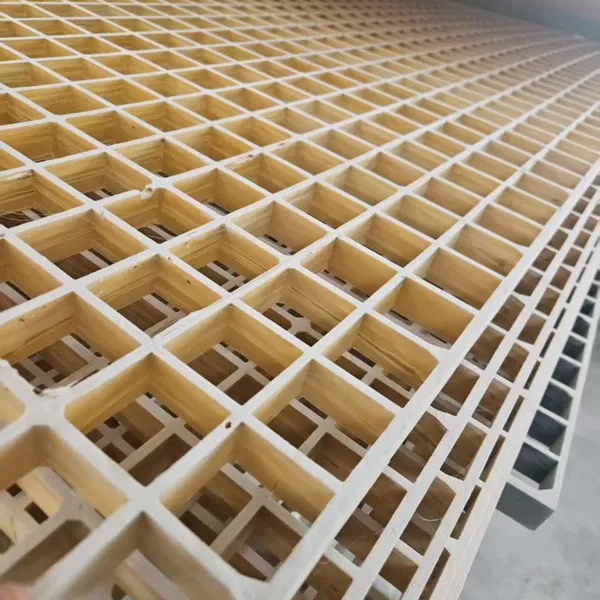 Read More
-
SMC Water Tank Panel Thickness and Pressure Ratings
November 3, 2026A contractor in East Africa specified a 4 metre high panel tank on one 8 mm wall schedule from top to bottom, because the drawing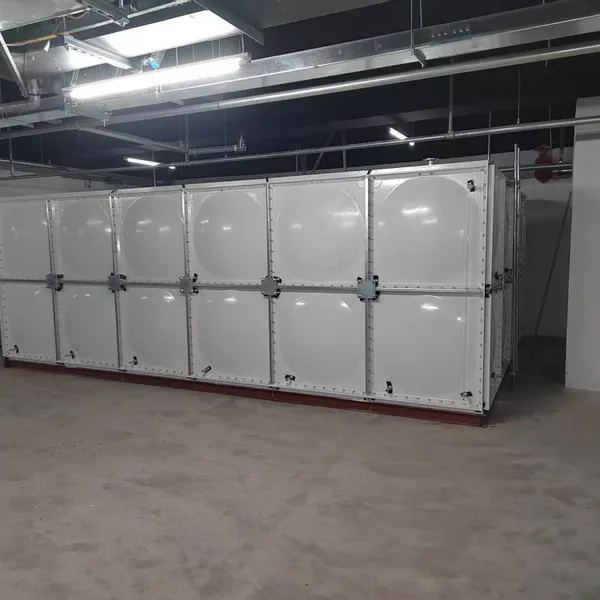 Read More
-
Sourcing FRP Grating: MOQ, Lead Time and Inspection Points
November 3, 2026A buyer in Southeast Asia ordered 120 square meters of molded grating and asked for a delivery date in three weeks. The supplier c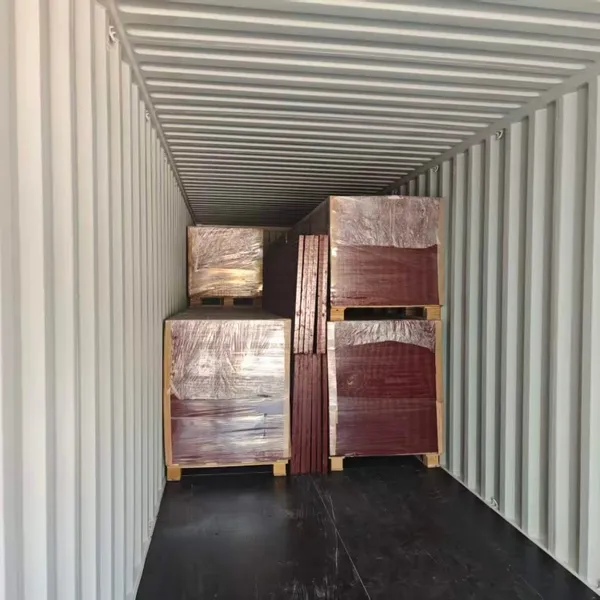 Read More
-
Buried Galvanized Tanks vs Concrete Cisterns
November 2, 2026A school in a coastal district replaced a leaking concrete cistern with a bolted galvanized tank, and the water stopped tasting of Read More

Contact Us
Recommended Products
-
 Desalination Plant FRP Grating Seawater Resistant Corrosion Proof Walkway PanelNegotiableMOQ: 300 Square Meters
-
Light High Strength Fiberglass Grating Coastal Dock WalkwayNegotiableMOQ: 100 Square Meters
-
Offshore Platform FRP Grating Saltwater Corrosion Resistant Oil Gas Deck FlooringNegotiableMOQ: 300 Square Meters
-
Fiberglass Reinforced Plastic FRP Grating for Industrial PlatformNegotiableMOQ: 100 Square Meters
-
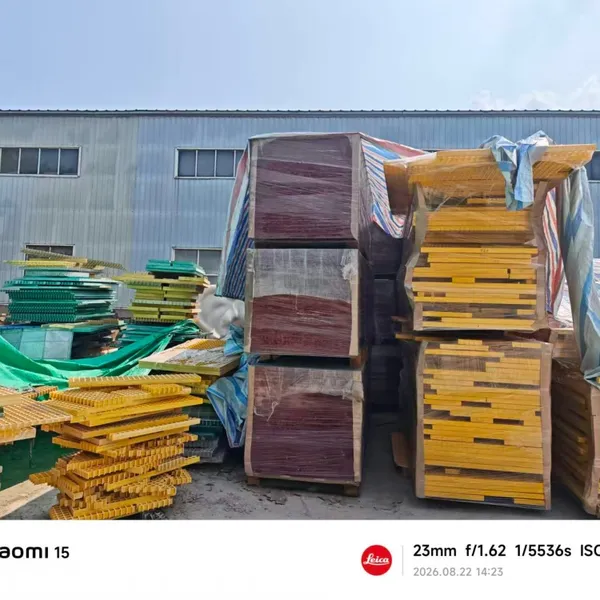
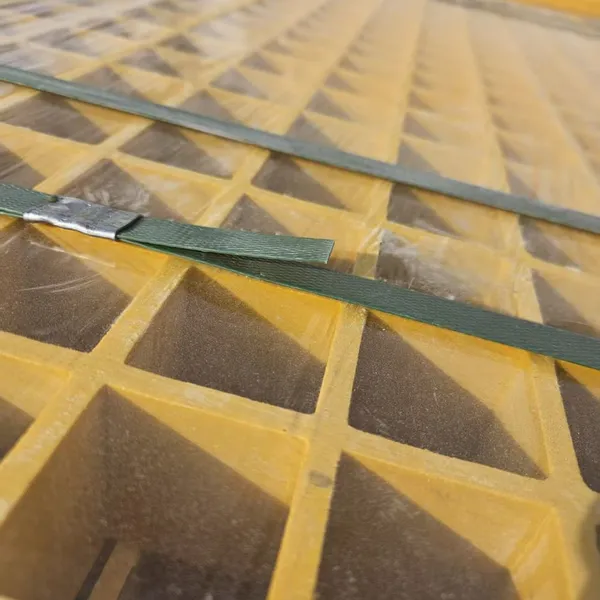
Anti‑corrosion FRP Grating Production Proces 50mm FRP Grating PlateNegotiableMOQ: 300 Square Meters
-
Professional SMC FRP Composite Bolted Panel Water Tank for Residential Rooftop TankNegotiableMOQ: 1 Cubic Meter
-
Easy Install SMC FRP Composite Bolted Panel Water Tank for Villa Rooftop Water StorageNegotiableMOQ: 1 Cubic Meter
-
High Quality SMC FRP Composite Bolted Panel Water Tank for Remote Area Water SupplyNegotiableMOQ: 1 Cubic Meter
-
Professional SMC FRP Composite Bolted Panel Water Tank for Rooftop Water StorageNegotiableMOQ: 1 Cubic Meter
-
Bulk Supply SMC FRP Composite Modular Panel Water Tank for Villa Rooftop Water StorageNegotiableMOQ: 1 Cubic Meter
-
Premium SMC FRP Composite Modular Panel Water Tank for Coastal Area Water TankNegotiableMOQ: 1 Cubic Meter
-
Cost Effective SMC FRP Composite Sectional Water Tank for Temporary Camp Water SupplyNegotiableMOQ: 1 Cubic Meter
-
Easy Install SMC FRP Composite Sectional Water Tank for Temporary Camp Water SupplyNegotiableMOQ: 1 Cubic Meter
-
Industrial Grade SMC FRP Composite Bolted Panel Water Tank for Rainwater Harvesting StorageNegotiableMOQ: 1 Cubic Meter
-
Bulk Supply SMC FRP Composite Modular Panel Water Tank for Coastal Area Water TankNegotiableMOQ: 1 Cubic Meter
-
Export Grade SMC FRP Composite Modular Panel Water Tank for Fishing Village Water StorageNegotiableMOQ: 1 Cubic Meter
-
New Design Porcelain Enamel Steel Bolted Panel Water Tank for Swimming Pool Heating Water StorageNegotiableMOQ: 1 Cubic Meter
-
Premium Porcelain Enamel Steel Bolted Panel Water Tank for Textile Plant Hot Water StorageNegotiableMOQ: 1 Cubic Meter
-
Heavy Duty Porcelain Enamel Steel Sectional Water Tank for Dairy Processing Hot WaterNegotiableMOQ: 1 Cubic Meter
-
Easy Install Porcelain Enamel Steel Bolted Panel Water Tank for Hot Water StorageNegotiableMOQ: 1 Cubic Meter