
 Business License

SMC Water Tanks in Industrial Process Water Systems
A textile plant replaced a corroded steel tank with an SMC panel tank some time ago and put the same grade of softened water into it. Nine months later the panels at the water line had chalked and begun to craze, and the plant blamed the tank.
The water carried a residual oxidising biocide dosed upstream for the cooling loop. Isophthalic resin tolerates it at low concentration and not at the figure the plant actually ran.
Selecting an industrial SMC water tank is a chemistry exercise before it is a capacity exercise. This article works through fluid compatibility, sizing for continuous operation, and the process water storage tank details that decide whether FRP tank industrial use fits a plant at all.
1. Industrial SMC Water Tank Selection by Fluid Type
Fluid type settles most of an industrial SMC water tank specification before capacity is discussed, because the resin family follows the chemistry rather than the volume.
Cooling tower make up water sits in the mild range and works with isophthalic resin. Rinse water from a plating line carries drag out acid and needs vinyl ester. Softened water is mild but often chlorinated, which pushes toward a resin with better oxidiser tolerance. Deionised water is aggressive in a different way, since it leaches ions from an under cured surface.
Temperature sits alongside chemistry. Isophthalic resin holds to about 60 C continuously and 80 C intermittently. Vinyl ester extends that to roughly 100 C. Above that band, a thermoplastic or a lined steel tank becomes the practical route.
| Fluid | Resin family | Temperature limit | Watch point |
|---|---|---|---|
| Cooling make up | Isophthalic | 60 C | Biocide residual |
| Plating rinse | Vinyl ester | 90 C | Acid drag out |
| Softened water | Isophthalic or vinyl ester | 60 C | Chlorine residual |
| Deionised water | Vinyl ester, high fill | 60 C | Ion leaching |
2. Process Water Storage Tank Sizing for Continuous Plant
A process water storage tank on a continuous plant is sized on interruption tolerance rather than on daily demand, because the plant does not stop when the mains does.
The working figure is the buffer needed to cover the longest credible supply interruption plus the time to bring a backup source online. A plant that can switch to a well or a tanker in four hours needs four hours of storage at peak draw, not a day at average draw.
Peak draw is the second number. A plant that averages 20 cubic meters an hour may draw 45 during a washdown shift, and a tank sized on the average will empty in the first hour of that shift.
Junping Environmental Protection Equipment sizes on the interruption figure rather than the daily average, because the two can differ by a factor of two or more.
Turnover is the third. A tank that holds ten days of water at ambient temperature will grow biofilm regardless of treatment, while the same volume turning over every two days stays clean with normal chlorination.
3. FRP Tank Industrial Use: Where It Fits and Where It Does Not
The case for FRP tank industrial use rests on three properties: no electrochemical corrosion, low installed weight, and a factory finish that does not need renewal.
Those properties fit cooling loops, rinse water, fire reserve, demineralised water and most neutral process streams. They fit badly where the fluid carries a solvent that swells the resin, where continuous temperature exceeds the resin limit, or where the tank must resist a pressure above a few tenths of a bar.
Pressure is the limitation buyers underestimate. A panel tank is a static store, and a process that needs 2 bar at the outlet needs a pump downstream rather than a pressurised tank.
Structural loads on the roof are a smaller but real constraint. A person walking on the lid needs a walkway or a spreader, and a tank roof is not designed for a pump set sitting on it.
Junping reviews the process flow diagram before quoting a tank, because that diagram shows what no datasheet does. It shows where the water comes from, what is dosed into it and how often the tank is emptied.
4. Chemical Compatibility of an Industrial SMC Water Tank
Compatibility is a table lookup in the simple cases. Real process water is a mixture, and mixtures behave differently from their components.
The same oxidising biocide that is harmless at 0.5 mg per litre will attack an isophthalic surface at 5 mg per litre, and plants often run a shock dose at the higher figure for a few hours each month. That quarterly shock is what shortens the service life, not the daily residual.
Solvent content matters as much. A rinse stream with 2 percent of a glycol ether will swell an isophthalic resin over months, and the swelling shows first as a soft surface and then as blistering at the water line.
Junping asks for the full water analysis and the dosing schedule before recommending a resin, because the daily average hides the events that damage a tank.
| Condition | Effect on isophthalic | Effect on vinyl ester |
|---|---|---|
| Chlorine 0.5 mg/L continuous | Minimal | Minimal |
| Chlorine 5 mg/L shock | Surface attack over years | Tolerated |
| Acid pH 3 continuous | Slow attack | Tolerated |
| Glycol ether 2 percent | Swelling, blistering | Slow swelling |
5. Process Water Storage Tank Temperature and Pressure
Temperature changes both the strength and the chemistry of a panel tank, and the effect is not linear.
A molded panel at 60 C retains roughly 70 percent of its room temperature flexural strength. At 80 C that falls toward 55 percent, which is why a tank specified on room temperature data can look over designed and behave as marginal in a hot plant room.
Thermal cycling matters more than steady temperature. A tank that swings between 20 C and 70 C every shift will work its seams, and the sealant rather than the panel is what fails first.
Pressure on a panel tank is hydrostatic plus any head from a connecting line. A 3 m water depth gives about 30 kPa at the base, and that is the figure the panels and tie rods are designed for. A pump discharging into the tank at 1.5 bar will load the roof or the inlet nozzle far beyond that design case.
Insulation changes the temperature case but does not remove it. A tank holding water at 70 C in a plant room at 35 C still sees the wall at close to 70 C on the inside, because the insulation works outward rather than inward.
6. FRP Tank Industrial Use in Cooling and Rinse Loops
Cooling and rinse loops are the two largest applications, and they stress a tank differently.
A cooling loop tank sees warm water, continuous aeration and a biocide programme. Aeration is the quieter problem, since oxygen saturated water at 40 C attacks a resin surface faster than still water at the same temperature.
A rinse loop tank sees chemical drag out, frequent level changes and occasional acid cleaning. The level changes matter because a tank that empties and refills daily exposes and wets the wall alternately, and that cycle drives sealant movement at the seams.
FRP tank industrial use in both cases depends on the inlet arrangement. An inlet that drops water through the air adds oxygen, while a submerged inlet keeps the water quieter and extends surface life.
7. Nozzle Layout on a Process Water Storage Tank
Nozzle layout decides how a process water storage tank behaves in service, and it is usually fixed after the tank is ordered rather than before.
Four connections cover most plants: inlet, outlet, overflow and drain. The inlet should discharge below the water line and away from the outlet, so that incoming water does not short circuit to the draw point. The outlet should sit 100 to 150 mm above the base to avoid pulling sediment.
The overflow sets the maximum level and should be visible from the operating floor. The drain should be at the lowest point, with the base falling toward it.
A tank without a fall to the drain cannot be emptied completely, and the residue that remains becomes the seed for the next biofilm cycle.
Junping draws the nozzle schedule before the panels are molded, so that reinforcing pads sit behind each connection rather than being added afterwards.
8. Industrial SMC Water Tank Structural Support
The support structure carries the full water load plus the tank, and a panel tank distributes that load differently from a cylindrical steel tank.
A rectangular panel tank applies a near uniform load across its footprint, at roughly 1.2 tonnes per square meter per meter of depth. A 3 m deep tank therefore applies about 3.6 tonnes per square meter, and the slab or frame under it must be designed for that figure rather than for the tank's empty weight.
Base preparation matters as much. A panel floor spanning a hollow will crack at a joint, and a 5 mm settlement is enough to open a seam. A continuous slab finished level to within 2 mm across the footprint removes that risk.
Where a tank sits on an elevated frame, the beam spacing should stay under 500 mm and the deflection under 2 mm at full load.
An industrial SMC water tank on an elevated frame also needs that frame designed for the full condition rather than the empty one, since a tank that has passed a hydrostatic test empty has proven very little.
9. FRP Tank Industrial Use versus Steel and Concrete
The comparison usually comes down to installed cost over a fifteen year window rather than first cost.
A carbon steel tank needs a lining, and that lining needs renewal every five to eight years. A concrete tank needs formwork, curing and a lining of its own, with a construction period measured in weeks. A stainless tank avoids both but costs three to five times an FRP tank at the same volume.
FRP sits between them. It arrives as a kit, assembles in days and needs no lining. Its weakness is temperature and pressure rather than chemistry.
| Option | First cost | Renewal | Build time, 100 m3 |
|---|---|---|---|
| Carbon steel, lined | Low | Lining every 5 to 8 years | 6 to 10 weeks |
| Concrete | Medium | Lining every 10 years | 6 to 12 weeks |
| Stainless steel | High | None | 8 to 12 weeks |
| FRP panel tank | Medium | Gaskets at 8 to 10 years | 3 to 5 days |
Zaoqiang Junping Environmental Protection Equipment LLC builds panel tanks for plants that need the water store inside an existing building, because a kit that passes a 900 mm door solves a problem that a welded tank cannot.
10. FAQ: Industrial SMC Water Tank Questions
10.1 What decides resin choice for an industrial SMC water tank?
The fluid chemistry, the temperature and the dosing schedule, in that order. Isophthalic resin covers cooling make up and most softened water below 60 C, while vinyl ester covers acid drag out, higher chlorine residuals and temperatures toward 90 C. The dosing schedule matters because a monthly shock dose can do more surface damage than the daily residual, and a specification written on the average figure alone will miss that. A water analysis from the plant beats a general chart whenever the stream is a mixture.
10.2 How do I size a process water storage tank for a plant that runs continuously?
Size on interruption tolerance rather than on daily demand. Work out the longest credible supply interruption, add the time needed to bring a backup source online, and multiply by the peak draw rather than the average. A plant averaging 20 cubic meters an hour but drawing 45 during washdown needs the higher figure. Then check turnover and refill rate, since a tank holding ten days of water will grow biofilm even with normal chlorination and one that cannot refill between shifts empties in the end.
10.3 Where does FRP tank industrial use stop being the right answer?
Three places. Solvent content that swells the resin, sustained temperature above the resin limit, and any requirement for pressure above a few tenths of a bar. A panel tank is a static store, so a process needing 2 bar at the outlet needs a pump rather than a pressurised tank. Roof loading is a smaller constraint, since a tank lid carries a person but not a pump set without a spreader frame, so confirm the roof duty separately if anything heavier will stand on it.
10.4 What foundation does an industrial SMC water tank need?
A continuous, level slab with the full water load designed in. A rectangular tank applies roughly 1.2 tonnes per square meter for each meter of depth, so a 3 m tank needs about 3.6 tonnes per square meter under it. Finish the slab level to within 2 mm across the footprint, because a panel floor spanning a hollow will crack at a joint. On an elevated frame, keep the beam spacing under 500 mm and the deflection under 2 mm at full water load, measured at mid span.
Recently Posted
-
Car Wash Grating Layout: Slope, Pit Depth and Flow
November 3, 2026A three bay site opened with new grating over the old pit, and by the second weekend water stood 40 mm deep at the entrance to bay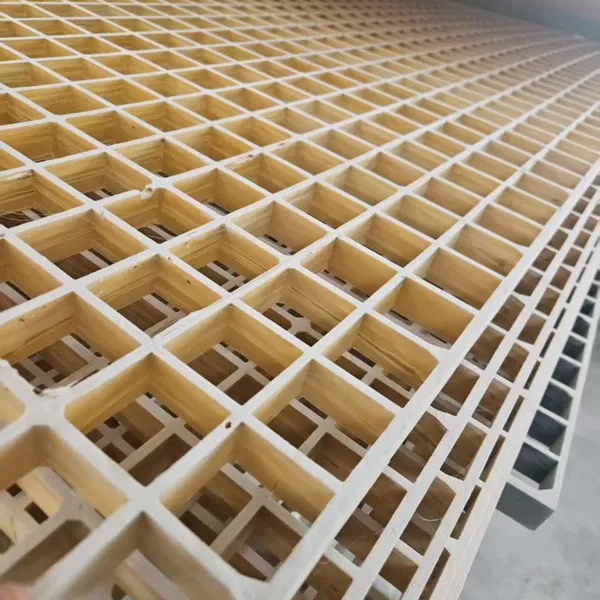 Read More
-
SMC Water Tank Panel Thickness and Pressure Ratings
November 3, 2026A contractor in East Africa specified a 4 metre high panel tank on one 8 mm wall schedule from top to bottom, because the drawing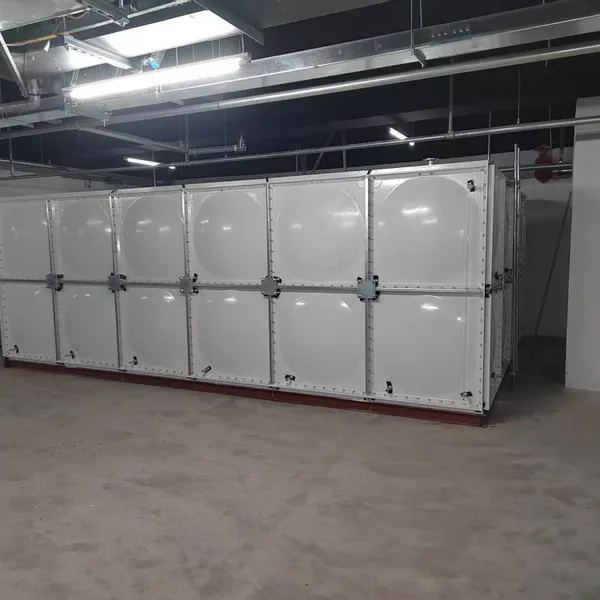 Read More
-
Sourcing FRP Grating: MOQ, Lead Time and Inspection Points
November 3, 2026A buyer in Southeast Asia ordered 120 square meters of molded grating and asked for a delivery date in three weeks. The supplier c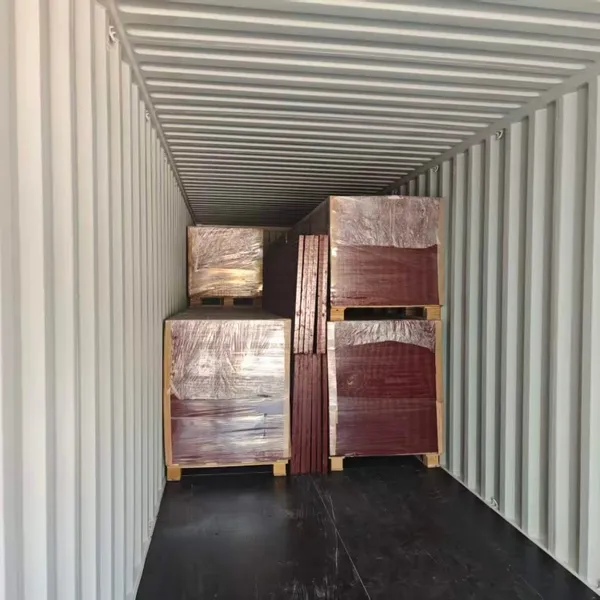 Read More
-
Buried Galvanized Tanks vs Concrete Cisterns
November 2, 2026A school in a coastal district replaced a leaking concrete cistern with a bolted galvanized tank, and the water stopped tasting of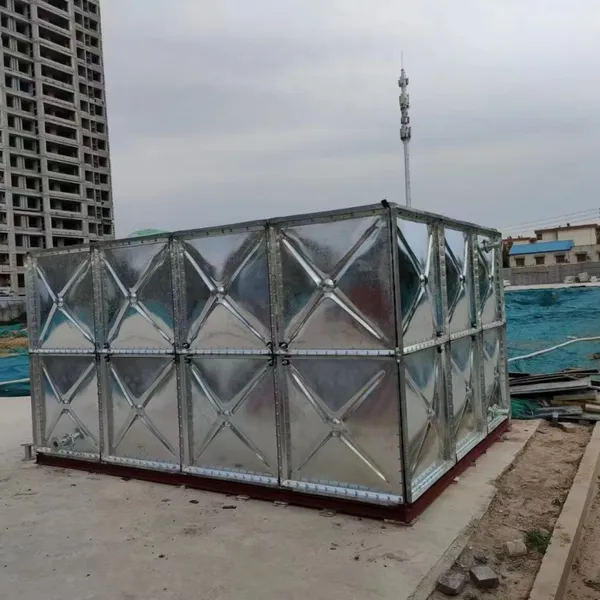 Read More

Contact Us
Recommended Products
-
 Desalination Plant FRP Grating Seawater Resistant Corrosion Proof Walkway PanelNegotiableMOQ: 300 Square Meters
-
Light High Strength Fiberglass Grating Coastal Dock WalkwayNegotiableMOQ: 100 Square Meters
-
Offshore Platform FRP Grating Saltwater Corrosion Resistant Oil Gas Deck FlooringNegotiableMOQ: 300 Square Meters
-
Fiberglass Reinforced Plastic FRP Grating for Industrial PlatformNegotiableMOQ: 100 Square Meters
-
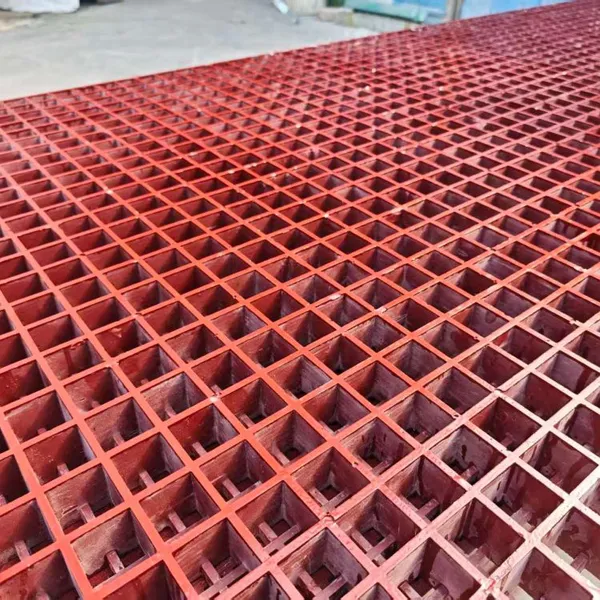
Anti‑corrosion FRP Grating Production Proces 50mm FRP Grating PlateNegotiableMOQ: 300 Square Meters
-
Professional SMC FRP Composite Bolted Panel Water Tank for Residential Rooftop TankNegotiableMOQ: 1 Cubic Meter
-
Easy Install SMC FRP Composite Bolted Panel Water Tank for Villa Rooftop Water StorageNegotiableMOQ: 1 Cubic Meter
-
High Quality SMC FRP Composite Bolted Panel Water Tank for Remote Area Water SupplyNegotiableMOQ: 1 Cubic Meter
-
Professional SMC FRP Composite Bolted Panel Water Tank for Rooftop Water StorageNegotiableMOQ: 1 Cubic Meter
-
Bulk Supply SMC FRP Composite Modular Panel Water Tank for Villa Rooftop Water StorageNegotiableMOQ: 1 Cubic Meter
-
Premium SMC FRP Composite Modular Panel Water Tank for Coastal Area Water TankNegotiableMOQ: 1 Cubic Meter
-
Cost Effective SMC FRP Composite Sectional Water Tank for Temporary Camp Water SupplyNegotiableMOQ: 1 Cubic Meter
-
Easy Install SMC FRP Composite Sectional Water Tank for Temporary Camp Water SupplyNegotiableMOQ: 1 Cubic Meter
-
Industrial Grade SMC FRP Composite Bolted Panel Water Tank for Rainwater Harvesting StorageNegotiableMOQ: 1 Cubic Meter
-
Bulk Supply SMC FRP Composite Modular Panel Water Tank for Coastal Area Water TankNegotiableMOQ: 1 Cubic Meter
-
Export Grade SMC FRP Composite Modular Panel Water Tank for Fishing Village Water StorageNegotiableMOQ: 1 Cubic Meter
-
New Design Porcelain Enamel Steel Bolted Panel Water Tank for Swimming Pool Heating Water StorageNegotiableMOQ: 1 Cubic Meter
-
Premium Porcelain Enamel Steel Bolted Panel Water Tank for Textile Plant Hot Water StorageNegotiableMOQ: 1 Cubic Meter
-
Heavy Duty Porcelain Enamel Steel Sectional Water Tank for Dairy Processing Hot WaterNegotiableMOQ: 1 Cubic Meter
-
Easy Install Porcelain Enamel Steel Bolted Panel Water Tank for Hot Water StorageNegotiableMOQ: 1 Cubic Meter