
 Business License

What Is an FRP Domestic Water Tank? Household and Building Use
A family in a hill town outside a municipal supply zone installed a 1,000 litre plastic tank on the roof. Two summers later the tank had bowed, the lid had warped in the sun, and the water carried a taste of the container rather than of the source.
The replacement was a moulded panel tank made from glass fiber reinforced plastic, assembled on a concrete plinth at ground level and pumped upward. It has held the same volume for longer, and the water leaves it tasting of nothing.
An FRP domestic water tank is the version of that second tank built for drinking water rather than for process duty. This article sets out what the term covers, how a household water storage tank is sized, and where the domestic FRP tank definition stops being useful and a different product takes over.
1. FRP Domestic Water Tank Definition and Panel Build
An FRP domestic water tank is a storage vessel built from glass fiber reinforced plastic panels, jointed on site into a sealed box. The panels are compression moulded from sheet moulding compound, which is a dough of chopped glass, resin and mineral filler pressed between matched dies.
Standard panels measure 1,000 by 1,000 mm and run from 4 mm to 16 mm thick depending on the head of water behind them. A 4 mm panel serves the upper course of a shallow tank, while a 10 mm or 12 mm panel carries the base course where pressure is highest.
The assembly relies on three parts working together: panel, seal and frame. Neighbouring panels clamp a gasket between their flanges, and internal tie rods or an external frame hold the box against the water pressure that is trying to push the walls apart.
Junping Environmental Protection Equipment moulds each panel on a matched die set and keeps one die per wall thickness, so panel geometry and bolt pattern stay identical across a production run.
2. Household Water Storage Tank Capacity for Daily Demand
The first figure to settle is daily consumption rather than tank size. A household of four using showers, a washing machine and a garden tap draws roughly 400 to 600 litres a day in a temperate climate, and closer to 800 litres where the garden is irrigated.
Capacity then follows the supply pattern. Where mains pressure arrives every day, one day of buffer is enough. Where a tanker delivers twice a week, three days is the working minimum.
A 1,000 litre tank therefore suits a small household on a daily supply, while a 2,000 litre tank suits the same household on an intermittent one. Doubling capacity doubles the stored load, which matters later in the placement discussion.
| Household size | Daily draw | Tank on daily supply | Tank on twice weekly supply |
|---|---|---|---|
| 2 people | 250 to 350 L | 500 L | 1,000 L |
| 4 people | 400 to 600 L | 1,000 L | 2,000 L |
| 6 people | 600 to 900 L | 1,500 L | 3,000 L |
| 4 people with garden | 800 to 1,000 L | 1,500 L | 3,000 L |
Junping sizes domestic tanks on the refill interval rather than on habit, because a tank filled once a week behaves very differently from one topped up every night. The first case needs volume and the second needs turnover.
3. Domestic FRP Tank Definition: Resin and Water Contact
A domestic FRP tank definition is not complete until the water contact surface is named. The resin system decides whether the water picks up taste, colour or odour, and it decides how the tank behaves against chlorine.
Food contact grade isophthalic polyester is the usual choice for a household water storage tank. It is applied as an inner gelcoat over the structural laminate, so no bare glass is exposed to the stored water.
Vinyl ester appears where the supply is chlorinated heavily or where the water runs mildly acidic. It costs more per square metre, and it is worth the difference in those two cases rather than as a default.
The domestic FRP tank definition also has to state the inner finish. A smooth, resin rich surface cleans down with a brush, while a rough one holds sediment and gives biofilm somewhere to start.
4. Where an FRP Domestic Water Tank Fits in a Building
An FRP domestic water tank works in three positions: on a roof, in a basement plant room, and at ground level outside the building. Each position changes the specification rather than the panel.
Roof mounting saves floor space and uses gravity for distribution. It also puts the full water load onto a structure that may never have been designed to carry it.
Basement mounting keeps the load low and shields the tank from sun, and it needs a pump to reach upper floors. Ground level mounting outside is the simplest of the three and takes the most space.
Household water storage tank selection often begins with position rather than with volume, because position rules out certain products before volume is ever discussed. A 3,000 litre tank that cannot pass the door is not a 3,000 litre option.
5. Household Water Storage Tank Placement and Structural Load
A cubic metre of water weighs one tonne, and that figure governs placement more than any other. A 5 cubic metre tank holds 5 tonnes before panel weight and frame are counted.
Roof structures are rated per square metre rather than in total, so a small tank on a weak roof is a larger problem than a big one on a strong roof. Ask for the imposed load limit in writing before choosing a position.
Where the tank sits on a roof, spread the load across at least two beams and keep the plinth continuous under the whole footprint. A plinth built from four pads concentrates the load at four points and will crack at the corners.
Where the household water storage tank sits on an elevated steel frame, keep beam spacing under 500 mm and deflection under 2 mm at full water load. That frame also needs designing for the full condition rather than the empty one.
6. Domestic FRP Tank Definition Against Polyethylene and Steel
Buyers often ask how the domestic FRP tank definition compares with the alternatives, and the fair answer is that each product wins on one axis. The table sets out where each one sits.
| Product | Practical size ceiling | Strength at large size | Water contact | Repair |
|---|---|---|---|---|
| Polyethylene | About 5,000 L in one piece | Walls bow as volume rises | Neutral, taste can carry | Not repairable once split |
| Galvanized steel | Unlimited, site built | High, needs lining | Zinc unless coated | Patch and recoat |
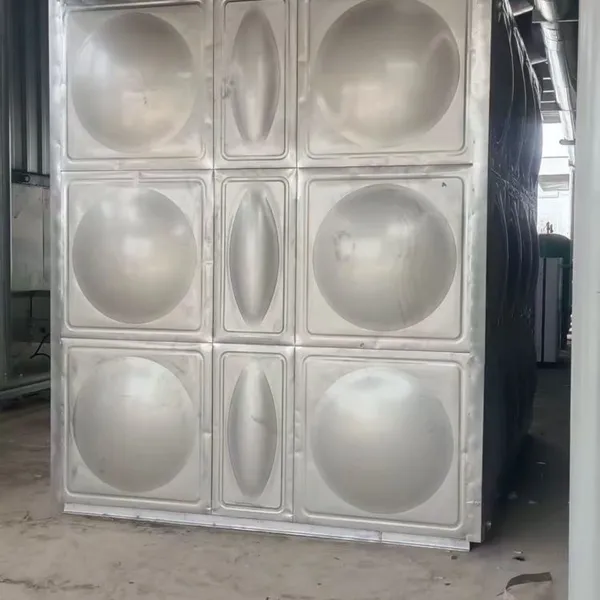
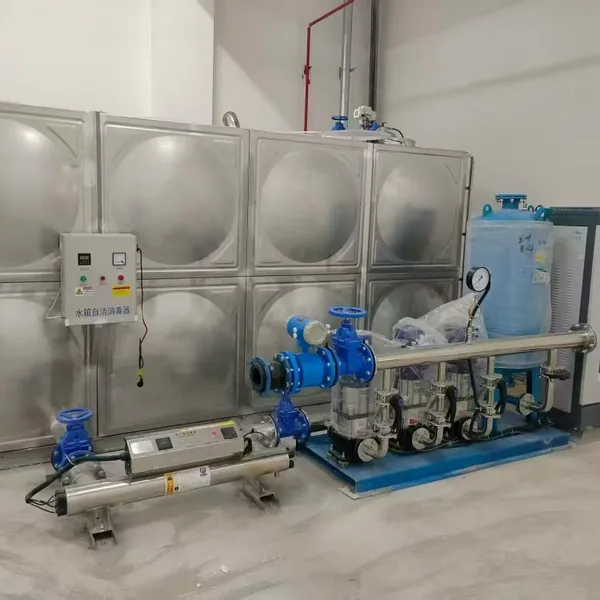
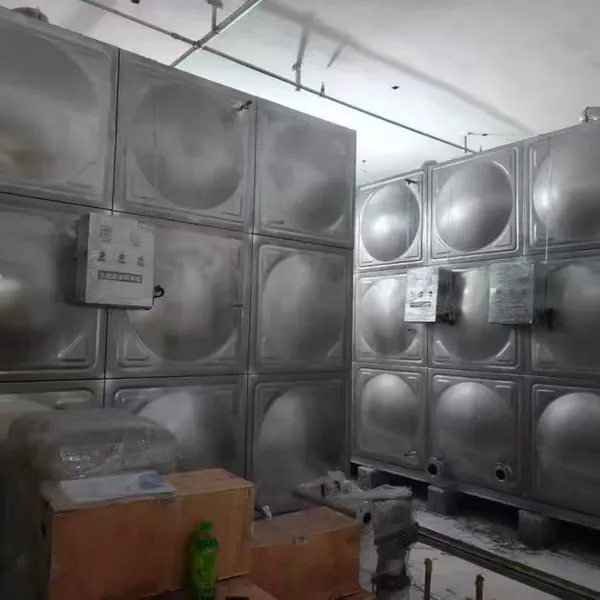
| Stainless steel | Unlimited, site built | High | Cleanest option | Weld repair |
| SMC FRP panels | Unlimited, site built | High with a frame | Food grade gelcoat | Single panel swap |
Polyethylene is cheap, light and available in one piece up to about 5,000 litres. It also softens in strong sun and cannot be repaired once a crack opens.
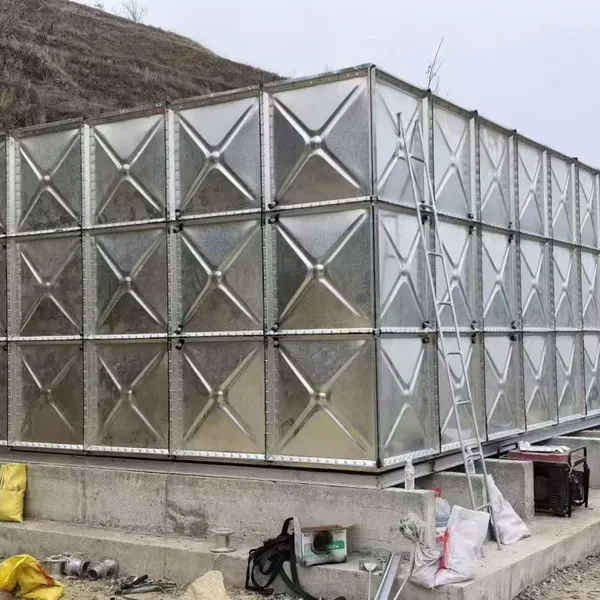
Galvanized steel is strong and cheap per litre, and it introduces zinc into the water unless it carries a lining. Stainless steel is the cleanest choice for potable water and it carries the highest price at domestic scale.
The domestic FRP tank definition wins where a tank larger than 5,000 litres has to pass through a door narrower than the tank itself. It also wins where a damaged panel has to be replaced without draining and removing the whole vessel.
7. Household Water Storage Tank Plumbing Detail
Plumbing decides whether the stored water stays usable. Four connections matter on any household water storage tank: inlet, outlet, overflow and drain.
The inlet should discharge above the high water line with an air gap, so a drop in mains pressure cannot pull tank water back into the supply. A float valve at the inlet does the level control.
The outlet sits 100 to 150 mm above the base so it does not draw sediment, and the last 100 mm leaves through the drain. The overflow must match or exceed the inlet diameter and must run to a visible discharge point.
A bottom drain of 50 mm serves a tank up to about 10 cubic metres, and 80 mm is easier to flush above that size. A vent opposite the inlet keeps the tank from drawing a vacuum as it empties.
8. Household Water Storage Tank Hygiene and Cleaning Access
Cleaning access belongs in the specification rather than in the maintenance plan. A domestic FRP tank without a manway is a tank that cannot be cleaned, and an unclean tank undoes the money spent on the resin.
The practical minimum is a 500 mm round hatch on the top, placed so a person can reach the far corner with a brush. One hatch serves a tank up to roughly 20 cubic metres.
Turnover matters more than cleaning interval. Water held for ten days grows biofilm even at a normal chlorine residual, so a tank sized far above demand creates its own quality problem.
The household water storage tank should be cleaned twice a year on an intermittent supply and once a year on a continuous one. Record the sludge volume at each clean, because that number sets the interval better than a calendar does.
9. Ordering and Assembling an FRP Domestic Water Tank
A domestic FRP water tank arrives as a flat pack of panels, gaskets, tie rods and a hatch, and it is assembled on the plinth. That flat shape is exactly what makes it usable where a one piece tank cannot pass.
A 5 cubic metre tank packs into roughly 1.2 cubic metres of crate, which is a fraction of the space it occupies once built. Freight therefore scales with panel area rather than with tank volume.
Assembly at that size takes two people about half a day with a torque wrench and a spirit level. The sequence runs base course, second course, tie rods, hatch, then plumbing.
Junping Environmental Protection Equipment ships the kit with a panel layout drawing keyed to the door width on site, so the panel order matches the route the panels will travel. That drawing also states the tightening sequence, since an uneven torque pattern distorts a gasket and starts a leak.
Zaoqiang Junping Environmental Protection Equipment LLC supplies each kit with a torque card for the tie rods, because a rod tightened by feel and a rod tightened to spec give different gasket compression. Commissioning is a fill and a watch. Fill in three stages, check every gasket at each stage, and leave the tank full for 24 hours before connecting the outlet.
10. FAQ: FRP Domestic Water Tank Questions
10.1 What does an FRP domestic water tank definition include?
Five items: panel thickness, resin type, inner finish, frame or tie rod arrangement and hatch size. Panel thickness follows the water head, so a tank is usually built from two or three thicknesses rather than one. Resin type decides taste and chlorine resistance, and the inner finish decides how easily the tank cleans. The hatch sets whether maintenance is possible at all, and an enquiry that states those five numbers gets comparable quotes rather than five different tanks at five prices.
10.2 How large should a household water storage tank be?
Start from daily draw, then multiply by the refill interval in days. A four person household draws 400 to 600 litres a day, so a daily supply needs about 1,000 litres and a twice weekly supply needs 2,000 litres or a little more. Add the garden load if the tank feeds irrigation, since a small lawn can double the figure in summer. Then check the stored weight against the floor or roof it will stand on, because a tank that is correctly sized and wrongly placed is still a problem.
10.3 Can a domestic FRP tank be installed on a roof?
Yes, provided the roof is rated for the loaded weight and the plinth spreads that load across two beams or more. A cubic metre of water is one tonne, so a 2 cubic metre tank adds 2 tonnes plus the panel and frame weight. Many residential roofs carry a much lower imposed load than that over a small footprint. Where the roof limit is short, move the tank to ground level and pump, which costs less than reinforcing a roof and carries no structural risk.
10.4 How often does a household water storage tank need cleaning?
Twice a year on an intermittent supply and once a year on a continuous one is a workable default. The interval should shorten where the source carries sediment or where the tank holds more than five days of demand, since long storage builds biofilm regardless of chlorine residual. Cleaning means draining, brushing the walls and floor, flushing the sludge out of the drain, and refilling. Record what came out, because a rising sludge volume points to a source problem rather than to a cleaning schedule that is too long.
Recently Posted
-
Car Wash Grating Layout: Slope, Pit Depth and Flow
November 3, 2026A three bay site opened with new grating over the old pit, and by the second weekend water stood 40 mm deep at the entrance to bay Read More
-
SMC Water Tank Panel Thickness and Pressure Ratings
November 3, 2026A contractor in East Africa specified a 4 metre high panel tank on one 8 mm wall schedule from top to bottom, because the drawing Read More
-
Sourcing FRP Grating: MOQ, Lead Time and Inspection Points
November 3, 2026A buyer in Southeast Asia ordered 120 square meters of molded grating and asked for a delivery date in three weeks. The supplier c Read More
-
Buried Galvanized Tanks vs Concrete Cisterns
November 2, 2026A school in a coastal district replaced a leaking concrete cistern with a bolted galvanized tank, and the water stopped tasting of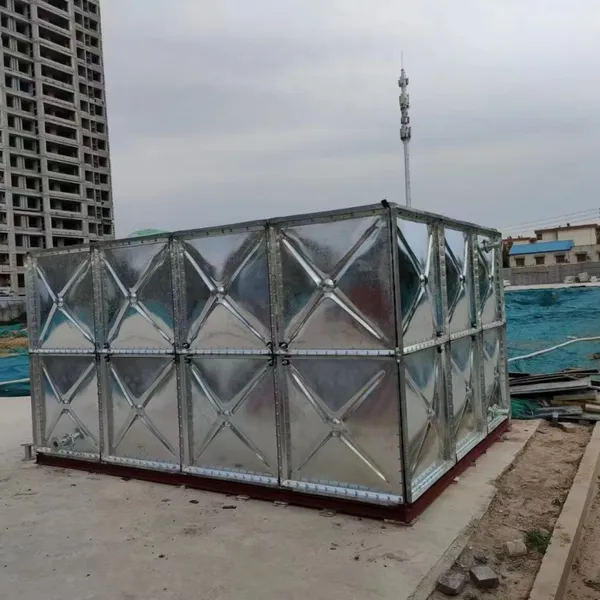 Read More

Contact Us
Recommended Products
-
 Desalination Plant FRP Grating Seawater Resistant Corrosion Proof Walkway PanelNegotiableMOQ: 300 Square Meters
-
Light High Strength Fiberglass Grating Coastal Dock WalkwayNegotiableMOQ: 100 Square Meters
-
Offshore Platform FRP Grating Saltwater Corrosion Resistant Oil Gas Deck FlooringNegotiableMOQ: 300 Square Meters
-
Fiberglass Reinforced Plastic FRP Grating for Industrial PlatformNegotiableMOQ: 100 Square Meters
-
Anti‑corrosion FRP Grating Production Proces 50mm FRP Grating PlateNegotiableMOQ: 300 Square Meters
-
Professional SMC FRP Composite Bolted Panel Water Tank for Residential Rooftop TankNegotiableMOQ: 1 Cubic Meter
-
Easy Install SMC FRP Composite Bolted Panel Water Tank for Villa Rooftop Water StorageNegotiableMOQ: 1 Cubic Meter
-
High Quality SMC FRP Composite Bolted Panel Water Tank for Remote Area Water SupplyNegotiableMOQ: 1 Cubic Meter
-
Professional SMC FRP Composite Bolted Panel Water Tank for Rooftop Water StorageNegotiableMOQ: 1 Cubic Meter
-
Bulk Supply SMC FRP Composite Modular Panel Water Tank for Villa Rooftop Water StorageNegotiableMOQ: 1 Cubic Meter
-
Premium SMC FRP Composite Modular Panel Water Tank for Coastal Area Water TankNegotiableMOQ: 1 Cubic Meter
-
Cost Effective SMC FRP Composite Sectional Water Tank for Temporary Camp Water SupplyNegotiableMOQ: 1 Cubic Meter
-
Easy Install SMC FRP Composite Sectional Water Tank for Temporary Camp Water SupplyNegotiableMOQ: 1 Cubic Meter
-
Industrial Grade SMC FRP Composite Bolted Panel Water Tank for Rainwater Harvesting StorageNegotiableMOQ: 1 Cubic Meter
-
Bulk Supply SMC FRP Composite Modular Panel Water Tank for Coastal Area Water TankNegotiableMOQ: 1 Cubic Meter

-
Export Grade SMC FRP Composite Modular Panel Water Tank for Fishing Village Water StorageNegotiableMOQ: 1 Cubic Meter
-
New Design Porcelain Enamel Steel Bolted Panel Water Tank for Swimming Pool Heating Water StorageNegotiableMOQ: 1 Cubic Meter
-
Premium Porcelain Enamel Steel Bolted Panel Water Tank for Textile Plant Hot Water StorageNegotiableMOQ: 1 Cubic Meter
-
Heavy Duty Porcelain Enamel Steel Sectional Water Tank for Dairy Processing Hot WaterNegotiableMOQ: 1 Cubic Meter
-
Easy Install Porcelain Enamel Steel Bolted Panel Water Tank for Hot Water StorageNegotiableMOQ: 1 Cubic Meter