
 Business License
Blog Categories

Buying Car Wash Grating: Load Class and Detergent Resistance
A chain bought 380 square meters of grating for nine new bays on a single price comparison. Two seasons later the panels at the entrance to each bay had gone chalky white and the grit had worn smooth, while the panels at the back looked new.
Both ends of every bay carried the same panel. What differed was the chemistry, because the entrance end is where wheel acid and hot wax land.
A car wash grating purchase guide that compares price per square meter and nothing else will produce exactly that outcome. This article covers the two specifications that decide whether a bay lasts, then sets out what a wash bay grating supplier check should actually examine.
1. Car Wash Grating Purchase Guide: Start with the Load
Load comes before chemistry, because a panel that deflects under a wheel fails immediately while a panel that fades fails slowly.
A passenger car puts roughly 4 kN on a single wheel, and a loaded van puts 7 to 9 kN on the rear axle. Those are point loads, and a point load is what a panel must be checked against rather than a uniform rating.
A 30 mm molded panel over supports at 900 mm centres carries passenger car traffic with deflection inside span over 200. A 38 mm panel at the same spacing carries light commercial traffic.
Any car wash grating purchase guide that quotes a load class without the span is quoting half a number. The span and the support detail decide whether the class applies.
2. Detergent Resistant Grating: What the Chemistry Does
Detergent resistant grating is a resin question rather than a coating question, because the attack happens at the surface and works inward through the laminate.
Alkaline detergents run at pH 10 to 12 and soften a polyester surface over time. Wheel acid runs at pH 2 to 3 and attacks the same surface from the other end of the scale.
Hot wax brings solvents and heat together, and the combination is harder on a resin than either alone. A panel that survives detergent and fails at the wax arch is a common pattern.
The failure looks like chalking first, then fibre print through, then a rough surface that holds dirt. By the time the grit has gone, the laminate under it has already lost a fraction of a millimetre.
3. Wash Bay Grating Supplier Check: Five Documents
A wash bay grating supplier check starts with paperwork, because the documents tell a buyer what the plant intends to make before anything is made.
Ask for five items: the resin datasheet with the grade named, the laminate schedule with thickness and glass content, the cure record for the batch, a dimensional report on a sample panel, and the packing list keyed to panel marks.
Those five let a buyer compare two suppliers on the same basis. A quotation that names a resin family without a grade cannot be compared with one that names the grade.
Where a supplier offers a certificate with no batch reference, treat it as marketing rather than as evidence. A document that cannot be tied to the panels in the crate proves nothing about those panels.
Junping Environmental Protection Equipment numbers every batch at the press and repeats that number on the panel edge, the packing list and the cure record. A buyer holding one panel can therefore find the whole history of it without asking anyone.
4. Car Wash Grating Purchase Guide: Grid, Depth and Surface
The three physical choices in a car wash grating purchase guide interact, and changing one usually changes another.
Grid size sets drainage and debris handling: 38 mm holds wrappers on the surface, 50 mm passes them into the trench. Depth sets load capacity, and surface sets slip resistance under a water film.
A grit bonded top gives the highest wet friction and wears through sooner than any other surface. A plain top lasts longer and is more slippery when wet, which matters on the entrance ramp where water arrives with the vehicle.
Zaoqiang Junping Environmental Protection Equipment LLC keeps both surfaces in the same resin grade, which matters because a grit top bonded in one resin and a plain top in another will weather at different rates.
Junping recommends a grit top over the standing area and a plain or fine grit top on the ramp, because the ramp takes the water first and the standing area takes the foot traffic.
Most bays end up with that split, and the panel marks on the packing list follow it so the two surfaces are not confused on site. Junping Environmental Protection Equipment supplies both surfaces on the same panel order so the two do not arrive in different shipments.
5. Detergent Resistant Grating: Resin Families Compared
Three resin families cover most wash bay duty, and the choice among them is a matter of what lands on the deck.
| Resin | Practical pH range | Temperature ceiling | Typical fit |
|---|---|---|---|
| Orthophthalic polyester | 3 to 9 | About 40 C | Hand wash with mild shampoo |
| Isophthalic polyester | 2 to 10 | About 60 C | Most automatic and self serve bays |
| Vinyl ester | 1 to 12 | About 90 C | Wheel acid, hot wax, high turnover |
Isophthalic covers the majority of sites and is the default in most quotations. Vinyl ester appears where wheel acid is used daily or where the wax arch runs hot.
A split specification works where the budget is tight. Vinyl ester panels at the entrance and under the wax arch, isophthalic panels over the standing area, and the same depth and grid throughout.
That split costs less than upgrading the whole deck and it puts the money where the chemistry is. Detergent resistant grating selection is a zoning exercise more often than it is a blanket upgrade.
6. Wash Bay Grating Supplier Check: What to Look at in the Plant
A plant visit answers questions that documents cannot, and a wash bay grating supplier check that never leaves the office is half a check.
Look at the dies first. A die with polished cavities and clean vent slots produces a panel with a full surface, while a scratched or chalked die transfers its defects to every panel that follows.
Then watch a mix being weighed. Resin, filler and initiator should be measured rather than estimated, and the record should be filled in as the batch is made rather than at the end of the shift.
Finally, look at the trim station. A panel trimmed before it has cooled will shrink away from the cut line, which shows up later as a gap against a frame.
Ask how the plant handles a rejected panel as well. A shop that reworks a short shot or a warped panel into a shipment will do so again, and a shop that scraps it has a quality boundary rather than a quality slogan.
7. Car Wash Grating Purchase Guide: Spares, Cut Plan and Freight
Three commercial items belong in any car wash grating purchase guide, and all three are easier to settle before the order than after.
Spares first: keep four to six panels of the same specification in store. A replacement panel ordered alone carries setup, packing and freight that can exceed its value several times.
Cut plan second. A deck designed to 1,220 mm or 610 mm modules wastes less material, and a nesting sheet shows the offcut area for each option before the order is placed.
Freight third. A 40 foot container holds roughly 300 square meters of 25 mm panel and about 220 of 38 mm, so panel depth changes how many containers a project needs.
8. Detergent Resistant Grating: Wheel Acid and Hot Wax Detail
Wheel acid is the single most aggressive chemical in a wash bay, and it is also the one most often left out of a specification.
Most wheel cleaners are phosphoric or hydrofluoric blends at pH 2 or below, applied as a spray and rinsed after a minute or two. The rinse does not reach the panel underside, so the acid sits in the grid and concentrates as the water evaporates.
That is why the failure appears on the underside first. Detergent resistant grating that looks sound from above can be chalky underneath, and the grid bars are the first part to go soft.
Two details help. Specify vinyl ester for the entrance zone, and ask for a panel with a sealed cut edge, since an open edge wicks acid along the glass bundles.
A third detail is the rinse. A bay with a final low pressure rinse over the grating reaches the underside that a high pressure lance misses, and that single step adds years to a deck at almost no running cost.
9. Wash Bay Grating Supplier Check: Packing and Handover
The last stage of a wash bay grating supplier check covers how the panels arrive, because damage in transit is damage the buyer owns.
Panels should be stacked no more than about 1.2 m high with timber bearers between bundles. A stack that leans puts a bending load on the bottom panel, and a panel that takes a set in storage will not flatten on site.
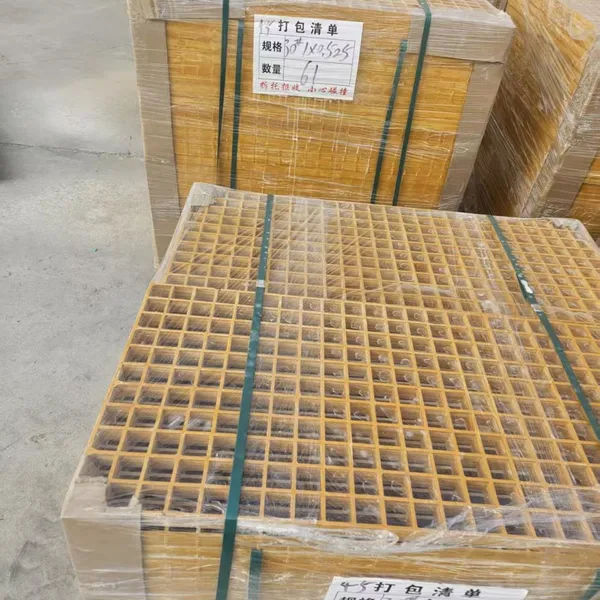
Cut panels need edge protection and sealed edges. Handover should include the panel marks, the batch records and a drawing that shows which panel goes where.
Junping Environmental Protection Equipment issues that set as a single bound file with the shipment, and repeats the panel mark on the packing list so a site check compares a physical mark against a document.
10. FAQ: Car Wash Grating Purchase Guide Questions
10.1 What load class does a car wash bay need?
Passenger car traffic is covered by a 30 mm molded panel on supports at 900 mm centres or closer, and light commercial traffic needs 38 mm at the same spacing. Ask for the concentrated load figure rather than the uniform one, because a wheel is a point load and a uniform rating flatters a panel. Then check deflection at your actual span, since the same panel over 1,200 mm supports behaves quite differently. A class quoted without a span is not a specification at all, since the same panel behaves differently on every support layout.
10.2 Which resin resists wheel acid?
Vinyl ester, with isophthalic as the compromise. Wheel cleaners sit near pH 2 or below, and an isophthalic surface will chalk and lose its grit within a few seasons under daily use. Vinyl ester holds that range and also takes the higher temperature at a wax arch. Where the budget will not stretch to vinyl ester throughout, use it at the entrance and under the arch and keep isophthalic over the standing area, since most failures start in the first two metres of the bay.
10.3 How many spare panels should I hold?
Four to six of the same specification, which covers impact damage without a production run. A single replacement panel ordered later carries die setup, packing and freight that together can exceed the panel value several times. Store them flat on bearers rather than leaning against a wall, because a panel that takes a set in storage will not sit flat on a frame. Mark the spares with the same batch reference as the installed panels so a colour difference does not appear later.
10.4 What should I ask a supplier to send before ordering?
Five documents: the resin datasheet with the grade named, the laminate schedule with thickness and glass content, a cure record for a recent batch, a dimensional report on a sample panel, and a blank packing list template showing how panel marks work. Those five let two suppliers be compared on the same basis. A certificate with no batch reference is not part of the set, because it cannot be tied to the panels that will arrive. Ask for the documents before the price, not after.
Recently Posted
-
Welded Modular vs Bolted Panel Stainless Tanks
November 5, 2026A bottling plant ordered a bolted panel tank because the panels would fit up a service stair, then filled it and watched a bead of Read More
-
Moving and Erecting Large Tank Sections
November 5, 2026A 500 cubic metre galvanized tank arrived on site as twelve wall sections and a stack of base plates, and the contractor had booke Read More
-
Solid Top Grating in Battery Rooms and Chemical Stores
November 5, 2026A telecom site replaced its open grid battery room floor with the same product after a spill ran straight through and pooled under Read More
-
FRP Grating Load Rating: Mesh Size, Thickness and Span Tables
November 4, 2026A maintenance engineer compared two quotations on a printed load table, chose the panel with the higher figure, and installed it a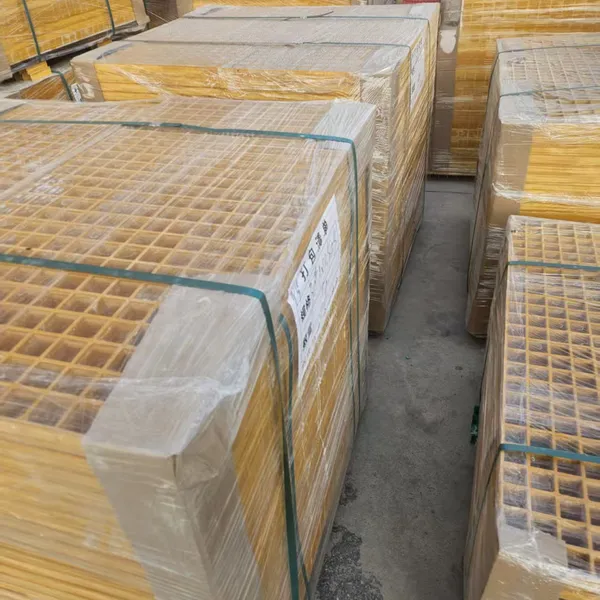 Read More

Contact Us
Recommended Products
-
 Desalination Plant FRP Grating Seawater Resistant Corrosion Proof Walkway PanelNegotiableMOQ: 300 Square Meters
-
Light High Strength Fiberglass Grating Coastal Dock WalkwayNegotiableMOQ: 100 Square Meters
-
Offshore Platform FRP Grating Saltwater Corrosion Resistant Oil Gas Deck FlooringNegotiableMOQ: 300 Square Meters
-
Fiberglass Reinforced Plastic FRP Grating for Industrial PlatformNegotiableMOQ: 100 Square Meters
-
Anti‑corrosion FRP Grating Production Proces 50mm FRP Grating PlateNegotiableMOQ: 300 Square Meters
-
Top Quality SMC FRP Composite Modular Panel Water Tank for Island Water SupplyNegotiableMOQ: 1 Cubic Meter
-
Reliable SMC FRP Composite Modular Panel Water Tank for Rooftop Water StorageNegotiableMOQ: 1 Cubic Meter
-
High Performance SMC FRP Composite Modular Panel Water Tank for Residential Rooftop TankNegotiableMOQ: 1 Cubic Meter
-
Reliable SMC FRP Composite Modular Panel Water Tank for Lightweight Water StorageNegotiableMOQ: 1 Cubic Meter
-
Cost Effective SMC FRP Composite Bolted Panel Water Tank for Villa Rooftop Water StorageNegotiableMOQ: 1 Cubic Meter
-
Health Commission FRP Grating Wear Dust Resistant Anti Slip Government Office Floor PanelNegotiableMOQ: 300 Square Meters
-
High Performance SMC FRP Composite Sectional Water Tank for Rainwater Harvesting StorageNegotiableMOQ: 1 Cubic Meter
-
Bulk Supply SMC FRP Composite Bolted Panel Water Tank for Coastal Area Water TankNegotiableMOQ: 1 Cubic Meter
-
Food Street FRP Grating Wear Oil Resistant Anti Slip Outdoor Walkway PanelNegotiableMOQ: 300 Square Meters
-
High Quality SMC FRP Composite Sectional Water Tank for Mountain Resort Water StorageNegotiableMOQ: 1 Cubic Meter
-
Easy Install SMC FRP Composite Modular Panel Water Tank for Coastal Area Water TankNegotiableMOQ: 1 Cubic Meter
-
Resort FRP Grating Wear Moisture Resistant Anti Slip Outdoor Walkway PanelNegotiableMOQ: 300 Square Meters
-
Durable SMC FRP Composite Modular Panel Water Tank for Residential Rooftop TankNegotiableMOQ: 1 Cubic Meter
-
Large Capacity SMC FRP Composite Sectional Water Tank for Villa Rooftop Water StorageNegotiableMOQ: 1 Cubic Meter
-
Scenic Area FRP Grating Wear Weather Resistant Anti Slip Outdoor Walkway PanelNegotiableMOQ: 300 Square Meters